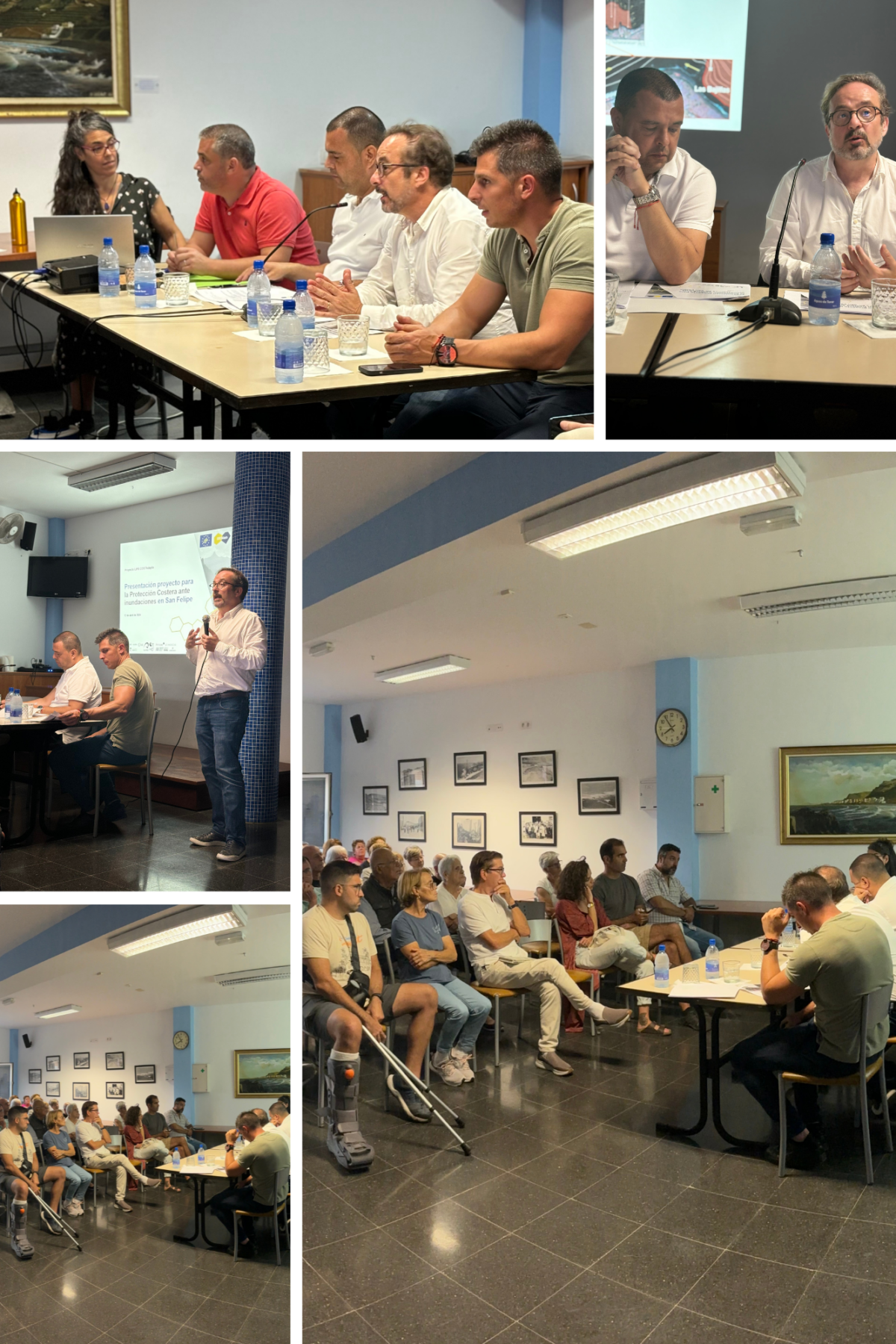
- LIFE COSTAdapta addresses the adaptation of the coast of Gran Canaria to sea level rise and could become a reference for coastal areas suffering the consequences of strong waves.
- The Cabildo de Gran Canaria leads, through the CIEGC, this seven-year project with a budget of 3,409,864 euros.
Several partners of the European LIFE COSTAdapta project, led by the Councilor for Environment, Climate, Energy and Knowledge of the Cabildo de Gran Canaria, Raúl García Brink, met on Friday afternoon, April 12, with the Mayor of Santa María de Guía, Pedro Manuel Rodríguez, and with representatives of the Association of Neighbours of San Felipe. The objective was to explain them in person the work being developed through the European project LIFE COSTAdapta, which aims to address the adaptation of the coast of Gran Canaria to sea level rise.
The meeting was also attended by the Councilor for Environment and Coastal Affairs of the municipality, Tanausú Santos, the mayor of Urban Planning, César Medina, as well as researchers from the University of Las Palmas de Gran Canaria (ULPGC) and the University of Cantabria (UC).
García Brink pointed out that one of the main known effects of climate change for the Canary Islands, due to their insular condition, will come from the sea. “We must anticipate and take measures that allow us to minimize the impact of coastal phenomena and rising sea levels to safeguard the populations that are on the front line”. In this sense, he explained that this R+D+i project is being carried out on the coast of San Felipe and seeks to develop nature-based solutions that will allow us to generate reefs to help us better stabilize our beaches in the face of rising sea levels.
He also thanked the municipal team and the neighbors for their collaboration, assuring that “we will hold future informative meetings with different groups in the area, such as surfers, since citizen collaboration is vital for this pioneering initiative”. This LIFE project aims to become a reference and be replicated in those coastal areas that suffer the consequences of strong waves.
Pedro Manuel Rodríguez thanked the Cabildo for choosing San Felipe as the first area to develop this important European project, “which will help protect and prevent the loss of housing and infrastructure from climate change, ensuring that future generations will be able to enjoy the neighborhood as we know it today”.
Progressive tidal pool-reef system
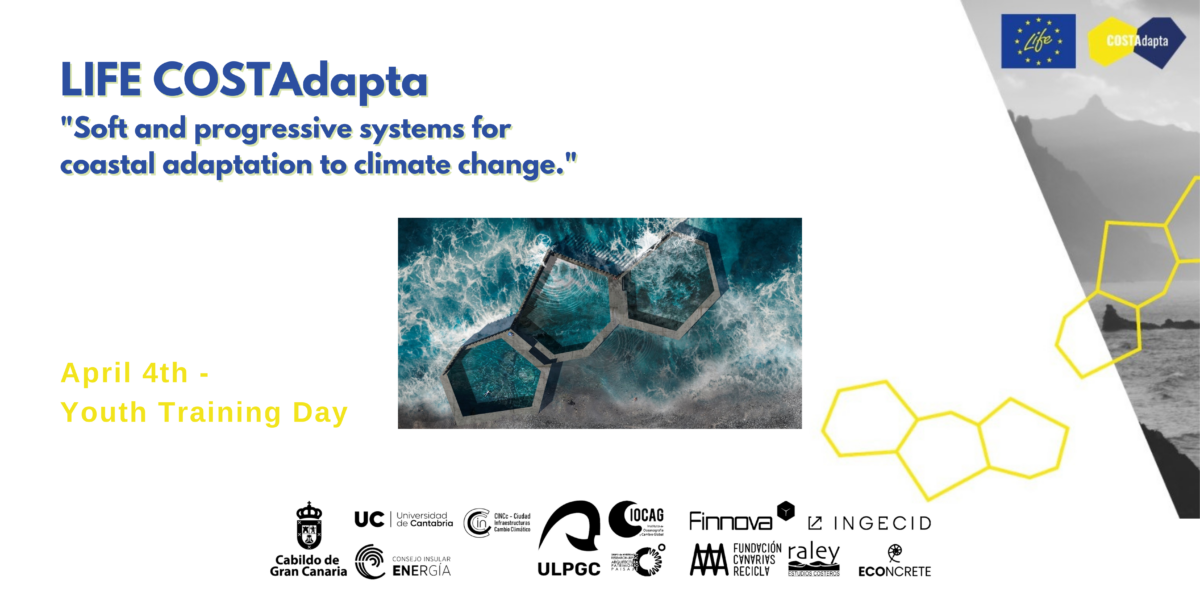
The main objective of the LIFE COSTAdapta project is to address the adaptation of the coast of Gran Canaria to sea level rise through an innovative methodology. To this end, a progressive tidal pool-reef system will be designed and tested, combining traditional tidal pool construction techniques with advanced solutions. This will contribute to the progressive adaptation of the coast of Gran Canaria to climate change, crucial given the high vulnerability of the Canary Islands to climate impacts, including sea level rise.
In addition to strengthening the resilience of coastal zones, LIFE COSTAdapta seeks to conserve habitats characteristic of these areas and protect the local tourism economy. The project will ensure economic sustainability by providing solutions to flooding and maintaining the region’s tourist attraction, which in turn will promote coastal stability.
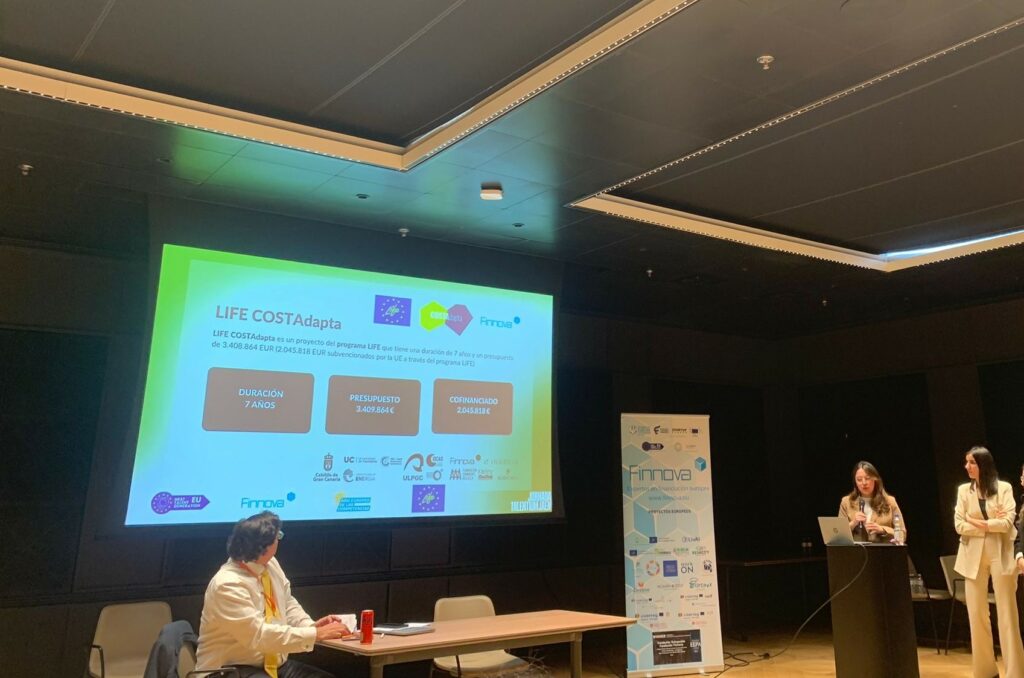
With a duration of seven years and a total budget of EUR 3,409,864 (EUR 2,045,818 subsidized by the EU through the LIFE Program), COSTAdapta is a project coordinated by the Gran Canaria Island Energy Council (CIEGC) of the Cabildo de Gran Canaria with the support of seven partners: the University of Las Palmas de Gran Canaria (ULPGC); the University of Cantabria (UC); INGECID, Research and Project Development; Raley Estudios Costeros S. C.P.; ECOncrete AQUA; Fundación Canaria para el Reciclaje y Desarrollo Sostenible (FCR) and Fundación Finnova.