COSTAdapta

Categories
News

LIFE CostAdapta collects opinions from affected residents and advances in technical solutions

  • The European Project has held two consultative sessions, with the residents of San Felipe and with the municipal services, to address the problem of waves in the Canary Islands.

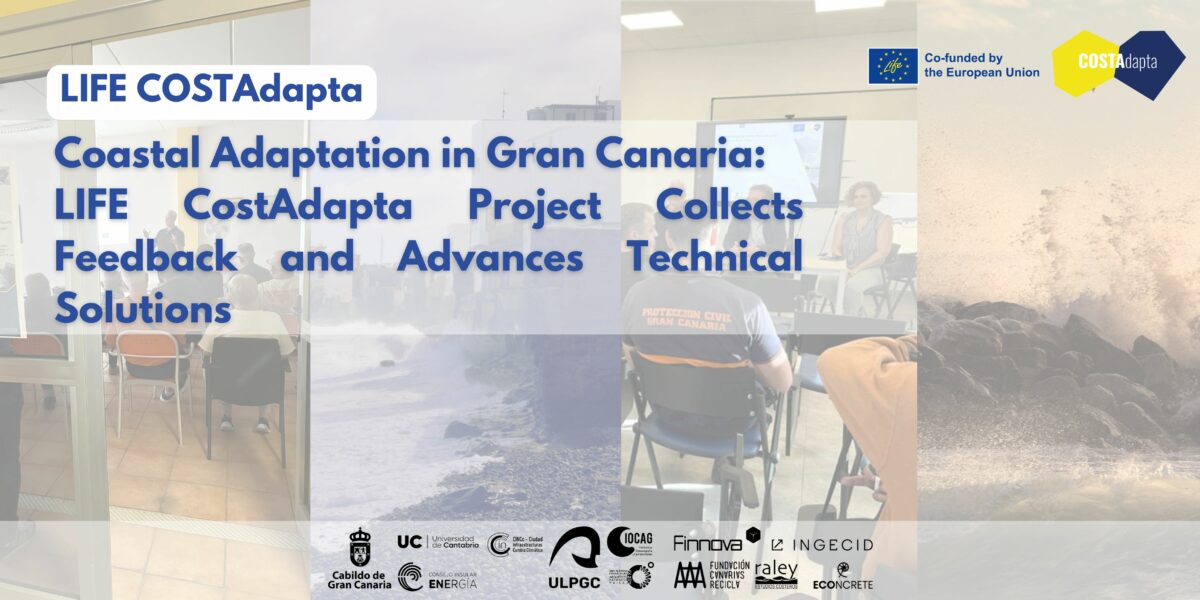
The LIFE CostAdapta Project is making steady progress, collecting the opinions of the affected population in the municipality of San Felipe, as well as local emergency institutions and organizations. The aim is to design an innovative solution that not only allows the adaptation of the coast of Gran Canaria to climate change, but also responds effectively to the needs of those who are directly affected by an increasingly dangerous wave.

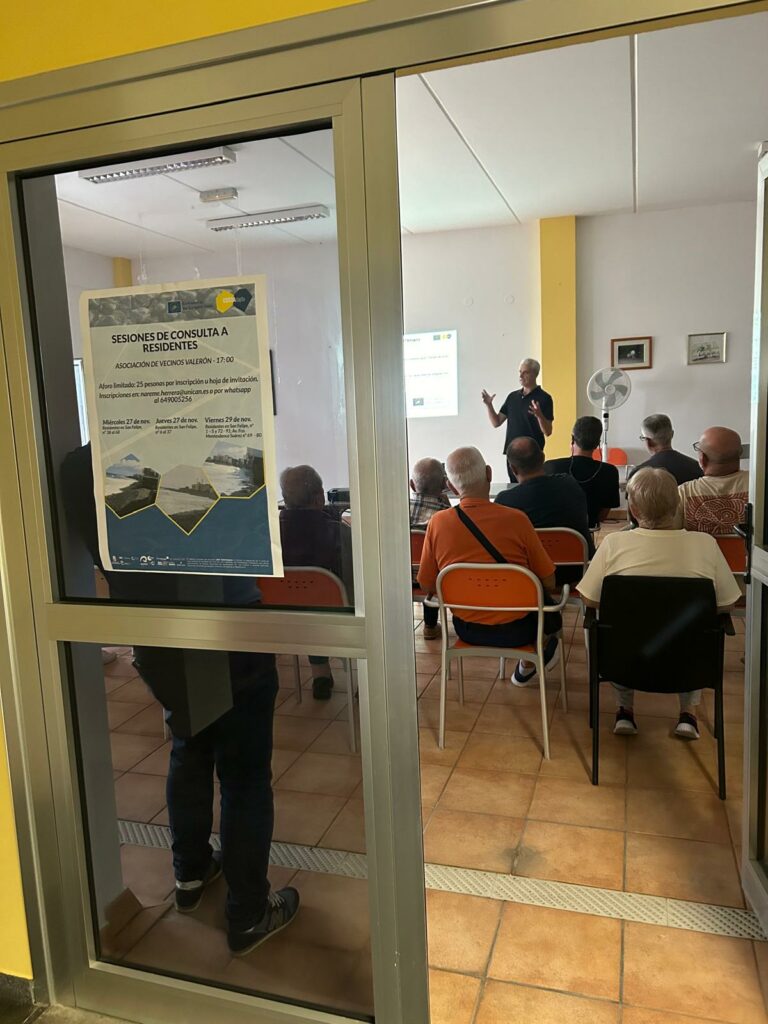
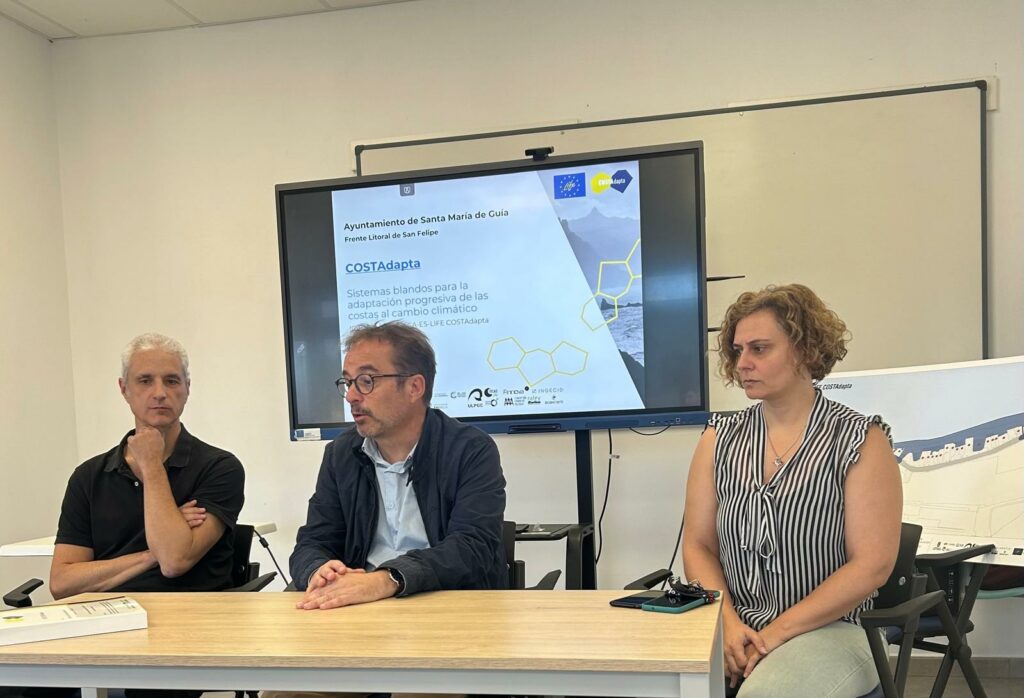
For this reason, two consultative sessions have been held to address the problem: the first, held on 26, 27 and 28 November, in which the residents of San Felipe shared their concerns and concerns; and the second, on December 2, in which municipal services, such as the Local Police and Civil Protection, met to advance a technical solution to the problem.

The results of the consultations have highlighted a clear priority for the project: the main need is to avoid material damage to buildings and infrastructure, closely followed by the promotion of biodiversity and the improvement of the environmental conditions of the coast.

One of the divergent voices has been that of the Canary Islands Surfing Federation, which has expressed its concern about the possible alterations that the construction of the tidal puddle reefs could cause in the natural behavior of the waves.

For their part, the municipal services have stressed the importance of acting immediately, arguing that each month of delay increases the risk and deterioration.

The LIFE CostAdapta Project seeks not only to protect coastal infrastructures, but also to preserve human lives in the face of the effects of climate change. Comprehensive risk management in this area is a priority shared by all the actors involved.

With the support of institutions, emergency services and the active participation of residents, LIFE CostAdapta is an example of collaboration to face climate change. The project, with a duration of seven years (2021-2028) and a budget of 3,409,864 euros, is 60% funded by the European Union’s LIFE Programme and coordinated by the Island Energy Council of Gran Canaria, in collaboration with several partners, such as the Finnova Foundation, ULPGC, the University of Cantabria, INGECID, Raley Estudios Costeros,  ECOncrete AQUA and the Canarian Recycles Foundation.
Categories
News

“Protecting our coast is an urgent need”: San Felipe residents support the LIFE COSTAdapta project

The initiative aims to strengthen coastal resilience against climate change through tidal pool-reef systems

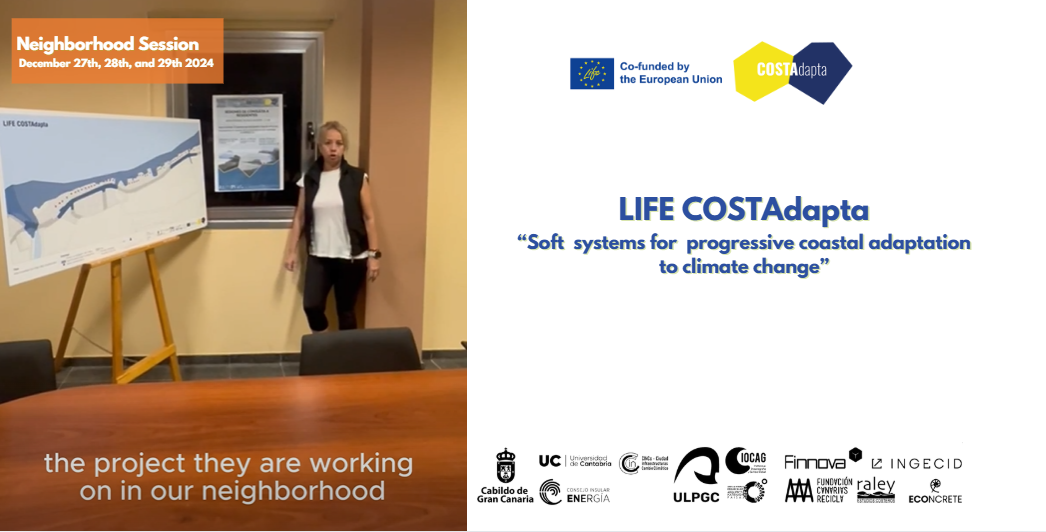
San Felipe, Gran Canaria. “It’s a relief to see that they care about our coast. For years, we’ve noticed how the sea level keeps rising, and this project offers us a much-needed solution.” These words from a local resident reflect the sentiment of many San Felipe neighbors who attended the recent community session organized by the LIFE COSTAdapta team to present this innovative solution to rising sea levels.

LIFE COSTAdapta is a pioneering European project that combines science, sustainability, and citizen participation to protect Gran Canaria’s coastline. Its main focus is the implementation of tidal pool-reef systems, an innovative methodology that naturally strengthens coastal structures, reduces tidal impacts, and promotes marine biodiversity.

Led by the Gran Canaria Island Energy Council (CIEGC), the project has a budget of €3,409,864, with 60% co-financed by the European Union’s LIFE Program. Its primary objectives include reducing the vulnerability of coastal areas to rising sea levels, promoting the natural regeneration of affected marine ecosystems, and actively involving local communities in designing and implementing adaptive measures. Over its seven-year duration, the project aims to transform areas like San Felipe into models of climate resilience for other coastal communities.

The tidal pool-reef systems not only aim to protect the coast but also positively impact local biodiversity and provide sustainable solutions with community involvement. As another attendee at the event remarked, “Projects like this benefit both the environment and those of us who live near the sea. It’s a great opportunity for our community.”

LIFE COSTAdapta reinforces Gran Canaria’s commitment to combating climate change, positioning the island as a leader in innovative coastal adaptation solutions.

About LIFE COSTAdapta

The project runs from 2021 to 2028 with a total budget of €3,409,864, 60% co-financed by the LIFE Program of the European Union. It is coordinated by the Gran Canaria Island Energy Council (CIEGC) in collaboration with partners such as Fundación Finnova, the University of Las Palmas de Gran Canaria (ULPGC), the University of Cantabria, INGECID, Raley Coastal Studies, ECOncrete AQUA, and Fundación Canaria Recicla.

Categories
News

The residents of San Felipe and technical experts contribute their vision to the LIFE COSTAdapta project

  • Citizen consultation and technical analysis: keys to protecting the coast of Gran Canaria
  • The University of Cantabria leads parallel sessions with residents and technicians to design effective solutions to the rise in sea level.

December 4, 2024 – LIFE COSTAdapta, the European project that seeks to adapt the coast of Gran Canaria to sea level rise through an innovative Tidal pool-reef methodology, continues to advance thanks to the active participation of the local community and experts in the sector.

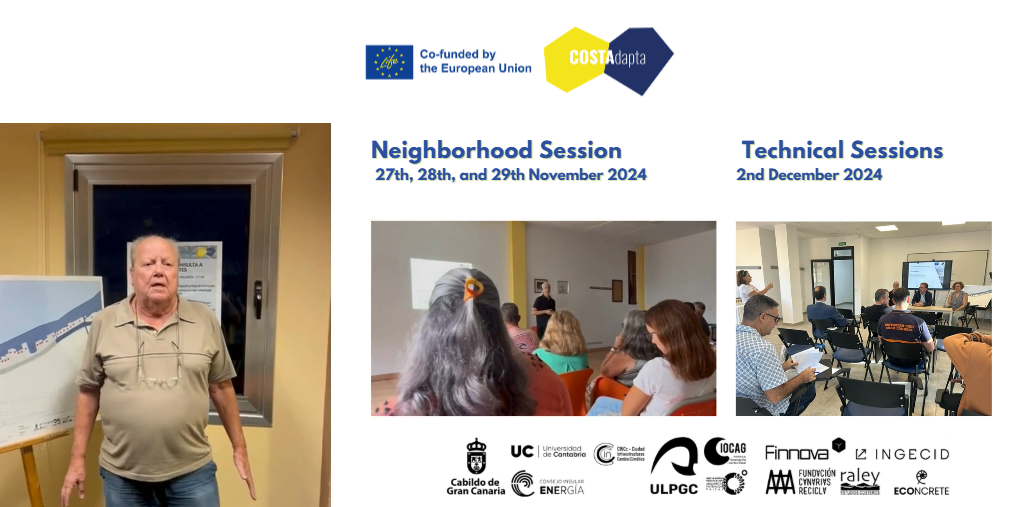
Between November 27 and 29, the University of Cantabria organized the Consultation Sessions for Residents in San Felipe. During these sessions, neighbors shared their concerns, suggestions, and concerns, ensuring that their voices were heard in the adaptation process.

On 2 December, Technical Sessions were held with institutions and experts, discussing the best solutions for coastal adaptation. At this event, Raúl García Brink, from the Cabildo de Gran Canaria, and the representatives of the University of Cantabria and Raley Coastal Studies team presented the progress of the project and collected valuable information.

LIFE COSTAdapta is a project 60% funded by the LIFE Programme of the European Union, with a total budget of €3,409,864 and a duration of seven years. It is coordinated by the Insular Energy Council of Gran Canaria (CIEGC) and has partners such as the University of Las Palmas de Gran Canaria (ULPGC), INGECID, ECOncrete AQUA, the Canary Islands Foundation for Recycling and Sustainable Development (Canarias Recicla), Raley Coastal Studies, the University of Cantabria (UC) and the Finnova Foundation. The main objective is to protect the coastal areas of Gran Canaria against the effects of climate change, through innovative solutions that promote biodiversity and environmental resilience, while maintaining local economic activities, especially in key tourist areas such as San Felipe.

The active participation of the local community is essential to ensure that the project not only protects the coastline, but also conserves natural habitats and maintains the stability of the tourism economy, which is so important to the region.