COSTAdapta

Categories
News

LIFE COSTAdapta celebrates International Clean Energy Day with the launch of a new informative video on the adaptation of the coast of Gran Canaria

  • The multimedia resource explains how the European project uses innovative solutions to protect coasts from rising sea levels, aligning with the objectives of the International Day of Clean Energy

Today, Sunday, January 26, 2025, within the framework of International Clean Energy Day, the LIFE COSTAdapta project has launched a new explanatory video that highlights its efforts to protect the coast of Gran Canaria against rising sea levels.

The project, led by the Gran Canaria Island Energy Council, is developing an innovative solution based on Tidal Pool-Reefs, which combine traditional techniques and advanced materials to protect marine ecosystems and coastal infrastructure. This approach aims to safeguard marine habitats, reduce risks to housing and infrastructure, and promote environmental sustainability.

With a budget of €3,409,864 (60% financed by the LIFE Programme of the European Union), LIFE COSTAdapta is a project that has the participation of various partners, including:

  • Island Energy Council of Gran Canaria (coordinator)
  • University of Las Palmas de Gran Canaria
  • University of Cantabria
  • INGECID
  • Raley Coastal Studies
  • ECOncrete AQUA
  • Canary Islands Foundation for Recycling and Sustainable Development (FCR)
  • Finnova Foundation

The new video, available in full on the project’s official website, presents the progress made and how the initiative contributes to the fight against climate change, protecting the region’s natural resources and encouraging community participation in areas such as San Felipe.

A local impact with a global vision

The project is developing a participatory solution that seeks to integrate the needs of the residents of San Felipe, guaranteeing their safety in the face of extreme weather events, protecting their heritage and promoting sports and economic activities in balance with nature.

Within the framework of the International Day of Clean Energy, LIFE COSTAdapta stresses that a sustainable transition starts from our coasts, with respectful solutions that combine innovation, tradition and social commitment.

More information: https://costadapta.energiagrancanaria.com/

Categories
News

Gran Canaria seeks to recover natural pools to protect the coast of San Felipe from climate change

The LIFE COSTAdapta project promotes marine biodiversity, protects homes and local heritage and preserves the sporting uses of the coast, with innovative measures backed by detailed scientific analyses.

The sea level on the Canary coasts has risen by about 4 mm per year in the last three decades and could rise by up to 30 cm by 2100, according to scientific estimates. Faced with this challenge, the European project LIFE COSTAdapta, led by the Cabildo de Gran Canaria, proposes sustainable solutions for the protection of the coastline in San Felipe.

With a total budget of €3,409,864, 60% co-financed by the European Union’s LIFE Programme, the project involves seven entities: University of Las Palmas de Gran Canaria (ULPGC), University of Cantabria (UNICAN), INTEC-GID, EWA-BEL, ECOncrete Tech, Fundación Canaria Recicla and Fundación Finnova. Multidisciplinary teams from these institutions, together with social agents, work on the development of adaptive proposals.

The actions include the recovery of puddles and traditional natural pools in the Canary Islands. Innovative materials are used to increase marine biodiversity and ensure the protection of homes and local heritage, respecting the sporting uses of the area. An exhaustive study of San Felipe has made it possible to identify key aspects for decision-making, based on scientific data and detailed analyses.

The cultural and natural heritage of San Felipe stands out for elements such as the old school, the church of San Felipe and the archaeological sites, which require preservation measures in the face of climatic risks. Marine biodiversity is also prioritized with the recovery of algae, molluscs and crustaceans through innovative materials, promoting traditional shellfishing.

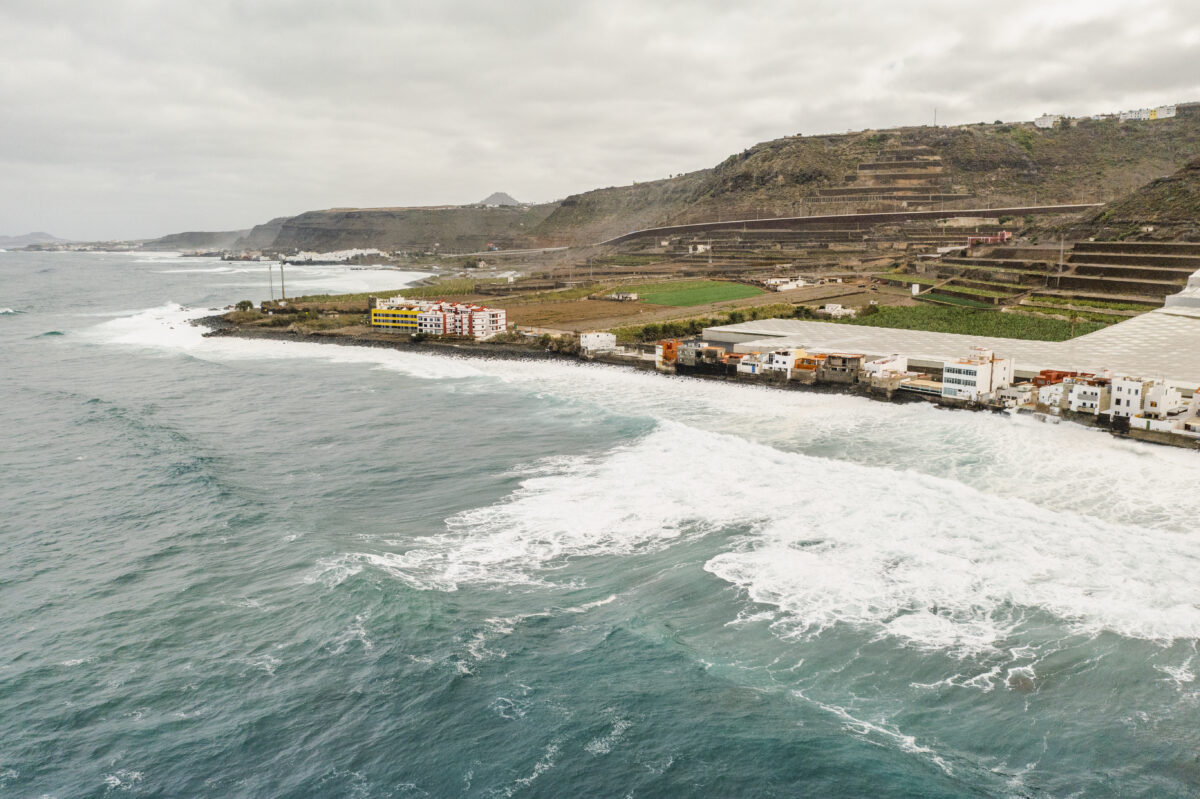
The coastline, known for emblematic waves such as the Circo wave and Vagabundos beach, faces high vulnerability. The analysis of coastal dynamics identifies two areas with significant retreat of the coastline. Marine and climate dynamics models assess the impact of waves in these areas and guide the design of effective solutions.

With this scientific basis, LIFE COSTAdapta is moving towards the implementation of adaptive measures that protect homes and environments without altering the natural balance. San Felipe is positioned as an international benchmark in adaptation to climate change, offering a replicable model for other islands of the archipelago and Macaronesian regions.

Categories
News

LIFE COSTAdapta strengthens Gran Canaria’s coastal resilience to climate change

The project promotes natural habitats and innovative solutions to protect coasts from rising sea levels

Gran Canaria is positioned as a benchmark in the fight against climate change thanks to the LIFE COSTAdapta project, an initiative co-financed by the LIFE Programme of the European Union with a budget of 3,409,864 EUR. This project seeks to implement innovative solutions to mitigate the effects of climate change and ensure the sustainability of the island’s coastal areas.

The main goal of LIFE COSTAdapta is to strengthen the resilience of the coasts of Gran Canaria to rising sea levels, a problem that is becoming increasingly evident due to climate change. To this end, actions are being developed that combine the protection of local ecosystems with the use of advanced technology. Among the measures envisaged are:

Construction of artificial reefs: These structures will not only reduce coastal erosion, but also promote marine biodiversity, serving as habitat for numerous species.

Creation of tidal pools: A natural solution that contributes to the regeneration of coastal habitats, promoting biodiversity and protecting the most vulnerable areas.

Sustainable tourism management: The project promotes a model that balances the needs of visitors, surfers and local communities, ensuring that economic development does not compromise the natural environment or the quality of life of the neighbors.

A collective commitment to tackle climate change

LIFE COSTAdapta is led by the Insular Energy Council of Gran Canaria (CIEGC) and has a high-level consortium that includes the University of Las Palmas de Gran Canaria (ULPGC), the University of Cantabria (UC), INGECID and the Finnova Foundation. This multidisciplinary collaboration ensures a comprehensive approach that combines research, innovation and sustainability.

In addition, the project not only seeks to adapt to the effects of climate change, but also to raise awareness among the local population and the sectors involved. Through workshops, communication campaigns and meetings with experts, the aim is to involve all the key actors in the protection of the island’s coasts.

 A replicable model for Europe

The impact of LIFE COSTAdapta transcends the borders of Gran Canaria. The solutions being developed have the potential to be replicated in other coastal regions of Europe that face similar challenges. This innovative and sustainable approach sets a precedent in managing the impacts of climate change on coasts.

Key data of the project

  • Duration: From 2023 to 2027
  • Total budget: 3,409,864 EUR
  • Co-financing of the European Union’s LIFE Programme: 60%
  • Partners: Consejo Insular de Energía de Gran Canaria, ULPGC, Universidad de Cantabria, INGECID, Fundación Finnova

More information:

Visit the official website of the project: https://costadapta.energiagrancanaria.com/

Categories
News

LIFE COSTAdapta reviews 2024 and addresses future challenges for the coasts of Gran Canaria

The European project made significant progress in coastal protection, focusing on strengthening resilience and preserving biodiversity. 

  • Insights gathered through coastal vulnerability analysis and community participation shaped the project’s priorities for 2025, with a focus on preventing material damage to infrastructure and improving environmental conditions.  

As 2024 draws to a close, LIFE COSTAdapta reflects on a year of dedicated efforts to protect the coasts and communities of Gran Canaria.  Launched in 2023, the LIFE

COSTAdapta project aims to safeguard the coasts of the second most populated island in the Canary archipelago. Gran Canaria faces significant threats from invasive and destructive wave activity, phenomena increasingly linked to global sea level rise driven by climate change. 

In response to these growing challenges, LIFE COSTAdapta focuses on strengthening the resilience of the most threatened coastal areas, while supporting the preservation of the region’s unique biodiversity. 

Throughout 2024, our partners have worked tirelessly to develop a tangible solution to this pressing problem. The project has introduced an innovative proximity reef system, which is inspired by the traditional ‘tidal pool reef’ construction technique found in the Canary Islands and the wider Macaronesia region. 

However, the adaptive approach to extreme natural conditions is not the only distinctive feature of the project. LIFE COSTAdapta also stands out for its participatory methodology, which emphasises close observation and active listening. 

This year we conducted a coastal vulnerability analysis to identify the areas most at risk of flooding. We also involved the island’s residents to gather their opinions and needs in relation to the proposed technical solution. 

The results of these sessions have been very valuable in defining the project objectives for 2025. 

The main priority identified for the coming year is the prevention of material damage to buildings and infrastructure (81% of respondents), followed by the improvement of biodiversity and environmental conditions along the coast (19%), and the improvement of conditions for water sports such as surfing (0%), as well as the promotion of the use and enjoyment of the coast (0%). 

About LIFE COSTAdapta
The project, which spans seven years, has a total budget of €3,409,864, of which €2,045,818 is co-financed by the European Union through the LIFE Programme.

LIFE COSTAdapta is led by the Insular Energy Council of Gran Canaria (CIEGC) under the Cabildo de Gran Canaria, with the support of collaborating partners. The 7 partners are: the University of Las Palmas de Gran Canaria (ULPGC); the University of Cantabria (UC); INGECID, Research and Project Development; Raley Coastal Studies S.C.P.; ECOncrete AQUA; the Canary Islands Foundation for Recycling and Sustainable Development (FCR); and the Finnova Foundation.

Categories
News

LIFE CostAdapta collects opinions from affected residents and advances in technical solutions

  • The European Project has held two consultative sessions, with the residents of San Felipe and with the municipal services, to address the problem of waves in the Canary Islands.

The LIFE CostAdapta Project is making steady progress, collecting the opinions of the affected population in the municipality of San Felipe, as well as local emergency institutions and organizations. The aim is to design an innovative solution that not only allows the adaptation of the coast of Gran Canaria to climate change, but also responds effectively to the needs of those who are directly affected by an increasingly dangerous wave.

For this reason, two consultative sessions have been held to address the problem: the first, held on 26, 27 and 28 November, in which the residents of San Felipe shared their concerns and concerns; and the second, on December 2, in which municipal services, such as the Local Police and Civil Protection, met to advance a technical solution to the problem.

The results of the consultations have highlighted a clear priority for the project: the main need is to avoid material damage to buildings and infrastructure, closely followed by the promotion of biodiversity and the improvement of the environmental conditions of the coast.

One of the divergent voices has been that of the Canary Islands Surfing Federation, which has expressed its concern about the possible alterations that the construction of the tidal puddle reefs could cause in the natural behavior of the waves.

For their part, the municipal services have stressed the importance of acting immediately, arguing that each month of delay increases the risk and deterioration.

The LIFE CostAdapta Project seeks not only to protect coastal infrastructures, but also to preserve human lives in the face of the effects of climate change. Comprehensive risk management in this area is a priority shared by all the actors involved.

With the support of institutions, emergency services and the active participation of residents, LIFE CostAdapta is an example of collaboration to face climate change. The project, with a duration of seven years (2021-2028) and a budget of 3,409,864 euros, is 60% funded by the European Union’s LIFE Programme and coordinated by the Island Energy Council of Gran Canaria, in collaboration with several partners, such as the Finnova Foundation, ULPGC, the University of Cantabria, INGECID, Raley Estudios Costeros,  ECOncrete AQUA and the Canarian Recycles Foundation.

Categories
News

“Protecting our coast is an urgent need”: San Felipe residents support the LIFE COSTAdapta project

The initiative aims to strengthen coastal resilience against climate change through tidal pool-reef systems

San Felipe, Gran Canaria. “It’s a relief to see that they care about our coast. For years, we’ve noticed how the sea level keeps rising, and this project offers us a much-needed solution.” These words from a local resident reflect the sentiment of many San Felipe neighbors who attended the recent community session organized by the LIFE COSTAdapta team to present this innovative solution to rising sea levels.

LIFE COSTAdapta is a pioneering European project that combines science, sustainability, and citizen participation to protect Gran Canaria’s coastline. Its main focus is the implementation of tidal pool-reef systems, an innovative methodology that naturally strengthens coastal structures, reduces tidal impacts, and promotes marine biodiversity.

Led by the Gran Canaria Island Energy Council (CIEGC), the project has a budget of €3,409,864, with 60% co-financed by the European Union’s LIFE Program. Its primary objectives include reducing the vulnerability of coastal areas to rising sea levels, promoting the natural regeneration of affected marine ecosystems, and actively involving local communities in designing and implementing adaptive measures. Over its seven-year duration, the project aims to transform areas like San Felipe into models of climate resilience for other coastal communities.

The tidal pool-reef systems not only aim to protect the coast but also positively impact local biodiversity and provide sustainable solutions with community involvement. As another attendee at the event remarked, “Projects like this benefit both the environment and those of us who live near the sea. It’s a great opportunity for our community.”

LIFE COSTAdapta reinforces Gran Canaria’s commitment to combating climate change, positioning the island as a leader in innovative coastal adaptation solutions.

About LIFE COSTAdapta

The project runs from 2021 to 2028 with a total budget of €3,409,864, 60% co-financed by the LIFE Program of the European Union. It is coordinated by the Gran Canaria Island Energy Council (CIEGC) in collaboration with partners such as Fundación Finnova, the University of Las Palmas de Gran Canaria (ULPGC), the University of Cantabria, INGECID, Raley Coastal Studies, ECOncrete AQUA, and Fundación Canaria Recicla.

Categories
News

The residents of San Felipe and technical experts contribute their vision to the LIFE COSTAdapta project

  • Citizen consultation and technical analysis: keys to protecting the coast of Gran Canaria
  • The University of Cantabria leads parallel sessions with residents and technicians to design effective solutions to the rise in sea level.

December 4, 2024 – LIFE COSTAdapta, the European project that seeks to adapt the coast of Gran Canaria to sea level rise through an innovative Tidal pool-reef methodology, continues to advance thanks to the active participation of the local community and experts in the sector.

Between November 27 and 29, the University of Cantabria organized the Consultation Sessions for Residents in San Felipe. During these sessions, neighbors shared their concerns, suggestions, and concerns, ensuring that their voices were heard in the adaptation process.

On 2 December, Technical Sessions were held with institutions and experts, discussing the best solutions for coastal adaptation. At this event, Raúl García Brink, from the Cabildo de Gran Canaria, and the representatives of the University of Cantabria and Raley Coastal Studies team presented the progress of the project and collected valuable information.

LIFE COSTAdapta is a project 60% funded by the LIFE Programme of the European Union, with a total budget of €3,409,864 and a duration of seven years. It is coordinated by the Insular Energy Council of Gran Canaria (CIEGC) and has partners such as the University of Las Palmas de Gran Canaria (ULPGC), INGECID, ECOncrete AQUA, the Canary Islands Foundation for Recycling and Sustainable Development (Canarias Recicla), Raley Coastal Studies, the University of Cantabria (UC) and the Finnova Foundation. The main objective is to protect the coastal areas of Gran Canaria against the effects of climate change, through innovative solutions that promote biodiversity and environmental resilience, while maintaining local economic activities, especially in key tourist areas such as San Felipe.

The active participation of the local community is essential to ensure that the project not only protects the coastline, but also conserves natural habitats and maintains the stability of the tourism economy, which is so important to the region.

Categories
News

LIFE COSTAdapta seeks to protect the Canary Islands coasts against climate change with sustainable solutions

  • The aim of the project is to recover the culture of puddles and traditional natural pools of the region.

Brussels, 29 November 2024 – In the last three decades, sea levels off the coast of the Canary Islands have risen by almost 4 millimetres per year, a direct consequence of climate change that threatens both marine ecosystems and coastal communities. Faced with this reality, the European project LIFE COSTAdapta proposes an innovative, sustainable and participatory solution that is being developed in San Felipe.

The LIFE COSTAdapta project, with a duration of seven years and a budget of 3,409,864 euros (60% co-financed by the LIFE Programme of the European Union), seeks to design a non-aggressive solution for coastal protection based on the recovery of traditional natural pools and puddles in the Canary Islands. This approach, inspired by local culture, is complemented by the use of innovative materials that increase marine biodiversity and ensure the safety of homes and heritage at risk from rising sea levels.

A solution based on nature and tradition

The intervention, which combines traditional techniques with modern approaches, focuses on soft and sustainable solutions. The proposed structures not only mitigate the effects of coastal erosion, but also favour the regeneration of marine habitats, promoting a balanced coexistence between human activities and the natural environment.

A participatory and inclusive process

LIFE COSTAdapta stands out for integrating the needs of all users in the design of its solutions. Neighbours, surfers, researchers and authorities work together to ensure that the proposals do not alter the unique character of the Canary Islands’ beaches, preserving both their traditional use and their tourist attraction.

Project Impact and Leadership

Coordinated by the Gran Canaria Island Energy Council (CIEGC) and supported by partners such as the Finnova Foundation, the University of Las Palmas de Gran Canaria (ULPGC) and ECOncrete, among others, this project sets a precedent in climate change adaptation in vulnerable coastal areas.

Categories
News

LIFE COSTAdapta: An innovative approach to protect the coasts of Gran Canaria from climate change

  • Protecting coasts and mitigating climate change are key objectives of the European project

Brussels, 15 November 2024. The European project LIFE COSTAdapta, with a budget of € 3,409,864 and a duration of 84 months, advances in its mission to protect and adapt the coasts of Gran Canaria in the face of the challenges of climate change. With the rise in sea levels and the impact on the coasts becoming more and more evident, LIFE COSTAdapta proposes a sustainable and innovative solution to mitigate the effects of climate change without compromising the ecological value or tourist attraction of the island.

LIFE COSTAdapta’s approach focuses on a tidal reef-pool system that combines traditional construction methods with innovative green engineering solutions. This system takes advantage of the construction of tidal pools, low-impact structures that protect the coast while improving local biodiversity and offering a natural and recreational attraction.

Objectives of the LIFE COSTAdapta project

Protecting coastlines and mitigating climate change: LIFE COSTAdapta seeks to strengthen coastal resilience by building reefs and tidal pools, helping to reduce the effects of erosion and sea level rise.

Promote biodiversity: These tidal pools act as natural habitats for various marine species, boosting local biodiversity and maintaining the balance of coastal ecosystems.

Making climate adaptation compatible with tourism: Through careful planning and environmentally friendly infrastructure, the project preserves the island’s tourist appeal, offering resilient and sustainable coastal spaces for visitors and the local community.

The project, led by the Gran Canaria Island Energy Council (CIEGC), has the collaboration of key institutions, including the University of Las Palmas de Gran Canaria (ULPGC), the University of Cantabria (UC), INGECID, Raley Estudios Costeros S.C.P., ECOncrete AQUA, and the Canary Islands Foundation for Recycling and Sustainable Development (FCR). The Finnova Foundation also supports the initiative as a key partner in promoting innovative and sustainable practices in coastal management.

With funding from the European Union’s LIFE Programme, the LIFE COSTAdapta project is in line with the climate adaptation and environmental sustainability objectives promoted by the programme. This transnational collaboration combines scientific knowledge, technical innovation and environmental commitment to provide effective solutions to the challenges of climate change on the coasts.

Throughout its implementation, the project has advanced in the planning and implementation of tidal puddle reefs, with promising results in reducing coastal erosion and progressively adapting to climate change. It is expected that the proposed system will serve as a replicable model in other coastal areas of the Canary Islands and Europe, favoring sustainable coastal development that prioritizes both environmental protection and the well-being of the local community and tourists.

About the LIFE Program

The LIFE Programme is the European Union’s main funding instrument for the environment and climate action. Since 1992, it has co-financed thousands of projects in the EU, promoting initiatives for climate change adaptation and mitigation, biodiversity conservation, and the transition to a circular and low-carbon economy. LIFE COSTAdapta is an example of how the programme supports the resilience of coastal communities in the EU to the effects of climate change.

Categories
News

The University of Cantabria presents the LIFE COSTAdapta project at the conference “Urbanism for climate action and ecological transition”

  • Coastal protection and climate adaptation for the Canary Islands are the key objectives of the project

The University of Cantabria (UC) presented last Friday, October 25, the progress and objectives of the LIFE COSTAdapta project at the event “Urbanism as a tool for climate action and ecological transition”. The conference, organised in collaboration with the Gran Canaria Island Energy Council (CIEGC), Finnova and the University of Las Palmas de Gran Canaria (ULPGC), underlined the role of urban planning as a driver of climate resilience in coastal areas.

During the event, Francisco José García (UC) highlighted the value of LIFE COSTAdapta to address one of the greatest challenges for the region, the rise in sea level. For her part, Patricia Caro, head of the ULPGC, explained how the project’s actions are aligned with the Climate Change Adaptation Plan, an essential strategy for the Canary Islands. The intervention of Alexis Lozano, representing the CIEGC, highlighted the long-term impact of LIFE COSTAdapta on the stability and sustainability of the Canary coasts.

About LIFE COSTAdapta

The LIFE COSTAdapta project, coordinated by the Island Energy Council of Gran Canaria (CIEGC) and with a duration of seven years, has a budget of €3,409,864 (60% co-financed by the LIFE Programme of the European Union). Its goal is to develop an innovative tidal puddle reef methodology that combines traditional and modern techniques to strengthen coastal protection and conserve both the natural environment and the tourism economy.

LIFE COSTAdapta is supported by a consortium of strategic partners, including: the University of Las Palmas de Gran Canaria (ULPGC), the University of Cantabria (UC), INGECID, Research and Project Development, Raley Estudios Costeros S.C.P., ECOncrete AQUA, Fundación Canaria para el Reciclaje y Desarrollo Sostenible (FCR), and the Finnova Foundation.

For more information about the event, see the link to the conference.