COSTAdapta

Categories
News

LIFE COSTAdapta reinforces the resilience of the coast of Gran Canaria: a balance of the last few months

  • With a budget of €2409,864, this European project seeks to create a progressive system of reefs-tidal pools
  • The consortium celebrates the International Day against Climate Change by reinforcing its commitment to the protection of coastal areas

Coinciding with the International Day against Climate Change, today, October 24, we want to remember the progress made within the framework of the LIFE COSTAdapta project, whose objective is to adapt the coast of Gran Canaria to the rise in sea level through natural and sustainable solutions.

In recent months, LIFE COSTAdapta has taken significant steps in its mission to protect the Canary Islands coastline against the impacts of climate change. During the month of June, two important training courses were held for sustainability professionals and experts in coastal management. These courses focused on advanced techniques for building Tidal pool-reefs, an innovative method that partially uses traditional practices of the Canary Islands, strengthening the adaptive capacity of the coast.

Attendees were able to learn first-hand how this technique not only mitigates the impact of rising sea levels, but also promotes the creation of natural habitats and preserves the local economy. The courses trained key professionals to implement these solutions in other vulnerable areas of the island.

A project of impact and future

With a total duration of seven years and a budget of €3,409,864, LIFE COSTAdapta is 60% co-financed by the European Union’s LIFE Programme. During this time, the aim is not only to create a progressive system of reefs-tidal pools, but also to generate practical knowledge for its application in other European coastal territories.

In a context where the Canary Islands are particularly vulnerable to the effects of climate change, this project not only represents an innovative effort in the protection of coastal areas, but also secures the future of a tourism-based economy, crucial for the region.

The next few months will be key for the implementation of the first phases of the reef-tidal puddle system on the coast of Gran Canaria. This initiative seeks to guarantee environmental sustainability, in addition to promoting public awareness of the importance of adopting innovative and natural solutions to climate change.

LIFE COSTAdapta will continue its work with the support of the Cabildo de Gran Canaria, the Consejo Insular de Energía de Gran Canaria (CIEGC) and a consortium of expert institutions, such as the University of Las Palmas de Gran Canaria (ULPGC) and the University of Cantabria (UC), among other key partners.

For more information, you can visit https://costadapta.energiagrancanaria.com/

Categories
News

LIFE COSTAdapta celebrates its second monitoring meeting to analyze project progress

  • The project’s partners inspected the study area and other northern regions of Gran Canaria affected by coastal erosion, visiting natural pools and protective structures that are part of the study.
  • Progress was assessed in mapping, participatory diagnostics, and the implementation of sustainability measures to replicate coastal protection solutions.

On September 12 and 13, 2024, the second coordination meeting of the LIFE COSTAdapta project took place in Gran Canaria, providing a platform to analyze advancements in coastal protection efforts in the region. The meeting was held in a hybrid format (in-person and online), allowing project partners to discuss progress and coordinate the next steps for LIFE COSTAdapta.

During the first day, partners visited the study area along the coast of San Felipe and other northern areas of Gran Canaria, such as “El Puertillo,” affected by coastal erosion. Various natural pools and other protective infrastructures against climate change impacts were evaluated during the visit.

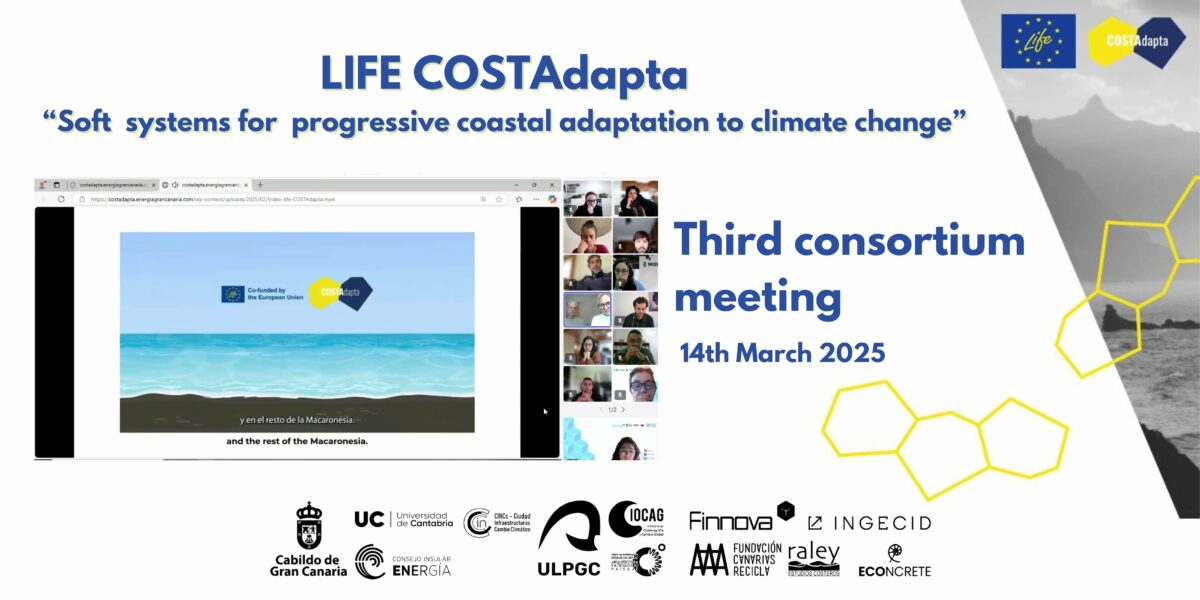
The second day of the meeting was held at the Elder Museum in Las Palmas de Gran Canaria, where participants reviewed the project’s overall status. Updates on preparatory actions were presented, and the leading partners of the work packages explained the current status of these and their deliverables, with a special focus on mapping and the analysis of the affected study areas. The importance of participatory diagnostics in developing effective solutions was also highlighted, as well as the implementation of new practices through innovative and sustainable technologies.

Progressive Tidal Pool-Reef System

The main objective of the LIFE COSTAdapta project is to address the adaptation of Gran Canaria’s coast to rising sea levels through innovative methodologies. To this end, a progressive tidal pool-reef system will be designed and tested, combining traditional tidal pool construction techniques with advanced solutions. This will contribute to the progressive adaptation of Gran Canaria’s coast to climate change, which is crucial given the high vulnerability of the Canary Islands to climate impacts, including sea-level rise.

In addition to strengthening the resilience of coastal areas, LIFE COSTAdapta aims to conserve characteristic habitats of these areas and protect the local economy. The project will ensure economic sustainability by providing flood solutions and maintaining the region’s tourist appeal, which, in turn, will support coastal stability.

With a duration of seven years and a total budget of €3,409,864 (of which €2,045,818 is funded by the EU through the LIFE Programme), COSTAdapta is coordinated by the Gran Canaria Island Energy Council (CIEGC) with the support of seven partners: the University of Las Palmas de Gran Canaria (ULPGC); the University of Cantabria (UC); INGECID, Research and Project Development; Raley Coastal Studies S.C.P.; ECOncrete AQUA; the Canary Foundation for Recycling and Sustainable Development (FCR); and the Finnova Foundation.
Categories
News

Effects of climate change on coastal zones

Coastal climate change refers to the effects of global climate change specifically in the coastal zone. These effects include:

Sea level rise: global warming causes thermal expansion of water and melting of glaciers and ice sheets, resulting in sea level rise. This can flood low-lying areas, erode coastlines and contaminate freshwater aquifers with salt water.

Coastal erosion: rising sea levels and increased frequency and intensity of storms can accelerate erosion of beaches and cliffs, affecting coastal infrastructure and natural habitats.

– Changes in water temperature: rising sea temperatures can affect marine ecosystems, including coral reefs, which are sensitive to temperature changes, and fish stocks, which may migrate to cooler waters, disrupting food chains and the fishing economy.

– Increased extreme weather events: climate change may intensify storms, hurricanes and other extreme events that impact coastal areas, causing destruction of infrastructure, loss of life and displacement of communities.

– Saltwater intrusion: sea level rise and overexploitation of coastal aquifers can cause saltwater to infiltrate underground freshwater supplies, affecting agriculture and drinking water supplies.

– Impacts on biodiversity: changes in climate and water conditions can affect coastal biodiversity, putting at risk marine and terrestrial species that depend on coastal habitats.

– Socio-economic effects: coastal communities may face significant economic losses due to the destruction of infrastructure, reduced tourism, fishing and other economic activities that depend on the stability and health of the coastal environment.

These effects of coastal climate change require rigorous planning and adaptation to mitigate impacts and protect both human communities and the natural ecosystems that inhabit coastal areas. The European COSTAdapta project aims to do this and much more, through the design and testing of a progressive Tidal pool-reef system, which will combine traditional tidal pool construction techniques with advanced solutions.

In addition to strengthening the resilience of coastal areas, LIFE COSTAdapta aims to conserve habitats characteristic of these areas and protect the local tourism economy. The project will ensure economic sustainability by providing solutions to flooding and maintaining the region’s tourist attraction, which in turn will support coastal stability.

With a duration of 7 years and a total budget of EUR 3,409,864 (EUR 2,045,818 subsidised by the European Union through the LIFE Programme), the project is coordinated by the Gran Canaria Island Energy Council (CIEGC) of the Cabildo de Gran Canaria, with the support of 7 partners: University of Las Palmas de Gran Canaria (ULPGC); University of Cantabria (UC); INGECID, Research and Project Development; Raley Estudios Costeros S. C.P.; ECOncrete AQUA; Fundación Canaria para el Reciclaje y Desarrollo Sostenible (FCR) and Fundación Finnova.

Categories
News

Consequences of Coastal Erosion

A few days ago, we analysed the causes of coastal erosion, a phenomenon that endangers many beaches in the Canary Islands. Today, we are going to analyse its consequences, which affect both the environment and human communities. These consequences can be economic, social and ecological.
Coastal erosion is a natural process by which coasts lose sediments and rocks due to the action of waves, currents and wind. The main consequences of coastal erosion are:
Economic Consequences

  1. Loss of Property and Infrastructure:
    o Destruction of Buildings: Houses, hotels, and other buildings located near the coast may be damaged or destroyed.
    o Damage to Infrastructure: Roads, bridges, sewage systems and other essential infrastructure may suffer costly damage.
  2. Impact on Tourism:
    o Reduction of Beaches: Erosion can reduce the size of beaches, affecting the main tourist attraction in many coastal areas.
    o Loss of Tourist Attractions: Natural monuments and other attractions may be eroded or damaged.
  3. Impact on the Local Economy:
    o Fishing: Erosion can alter marine habitats, affecting fishing productivity.
    o Coastal agriculture: Agricultural land near the coast may be inundated by seawater, affecting production.
    Social Consequences
  4. Displacement of Communities:
     Forced Relocation: Coastal communities may be forced to relocate due to loss of land and risk of flooding.
     Impact on Housing: Loss of coastal property may leave people homeless and without livelihoods.
  5. Loss of Cultural Heritage:
     Archaeological and Cultural Sites: Erosion can destroy historical and cultural sites located near the coast.
     Community Identity: Communities may lose part of their identity and cultural heritage as they are displaced.
  6. Food Security: Communities that depend on fishing and other marine activities may see their food security compromised due to the degradation of marine ecosystems.
    Ecological Consequences
  7. Destruction of Natural Habitats:
     Marine Ecosystems: Erosion can damage coral reefs, seagrasses and other essential marine habitats.
     Coastal Vegetation: The loss of mangroves, dunes and other coastal vegetation affects numerous species that depend on these habitats.
  8. Loss of Biodiversity:
     Threatened Species: Erosion can lead to the disappearance of species that exclusively inhabit coastal areas.
     Ecosystem Alteration: Changes in ecosystem structure can have knock-on effects, affecting multiple species.
    Environmental Consequences
  9. Pollution:
     Runoff and Sediment: Erosion can increase the amount of sediment and pollutants reaching the sea, affecting water quality.
     Salinisation Pollution: Saltwater intrusion into aquifers and agricultural land can affect drinking water supplies and agricultural productivity.
  10. Alteration of Natural Processes:
     Sedimentation Cycles: Disruption of natural sedimentation cycles may affect the formation of beaches and dunes.
     Impact on Coastal Morphology: The shape and structure of the coastline can change drastically, altering the natural dynamics of the region.
    3. Habitat Loss: Coastal erosion can destroy critical habitats for a variety of species, including birds, fish and other marine life. This can lead to a decrease in biodiversity and affect local ecosystems.
  11. Ecosystem Degradation: Mangroves, salt marshes and coral reefs, which protect coastlines and provide important ecological services, can be degraded or destroyed.
  12. Increased Water Turbidity: Erosion can increase the amount of sediment in the water, which affects water quality and can damage aquatic ecosystems.
    Increased Vulnerability to Natural Disasters
  13. Flooding: Loss of natural barriers such as dunes and mangroves can increase the vulnerability of coastal areas to flooding and storms.
  14. Storms and storm surges: Without the natural protection provided by beaches and other coastal ecosystems, communities may be more vulnerable to the impacts of storms and storm surges.
    Coastal erosion has multiple and serious consequences that affect both the environment and human communities. It is crucial to implement a combination of mitigation and adaptation strategies to protect coasts, preserve ecosystems and ensure the well-being of coastal communities.
    Coastal erosion has multiple and serious consequences that affect both the environment and human communities. It is crucial to implement a combination of mitigation and adaptation strategies to protect coasts, preserve ecosystems and ensure the well-being of coastal communities. An example of this is proposed in the LIFE COSTAdapta project, which will address the adaptation of the coast of Gran Canaria to sea level rise through an innovative methodology. To this end, a progressive tidal pool-reef system will be designed and tested, combining traditional tidal pool construction techniques with advanced solutions.
    This will contribute to the progressive adaptation of the Gran Canaria coast to climate change, crucial given the high vulnerability of the Canary Islands to climate impacts, including sea level rise. In addition to strengthening the resilience of coastal areas, LIFE COSTAdapta aims to conserve habitats characteristic of these areas and protect the local tourism economy. The project will ensure economic sustainability by providing solutions to flooding and maintaining the region’s tourist attraction, which in turn will support coastal stability.
    The project, with a duration of 7 years and a total budget of 3,409,864 EUR (2,045,818 EUR subsidised by the European Union through the LIFE Programme), is coordinated by the Gran Canaria Island Energy Council (CIEGC) of the Cabildo de Gran Canaria, with the support of 7 partners: University of Las Palmas de Gran Canaria (ULPGC); University of Cantabria (UC); INGECID, Research and Project Development; Raley Estudios Costeros S. C.P.; ECOncrete AQUA; Fundación Canaria para el Reciclaje y Desarrollo Sostenible (FCR) and Fundación Finnova.
Categories
News

Main causes of coastal erosion

Did you know?
Climate change and coastal erosion are closely linked, and their interactions have significant implications for coastal areas and the communities living there.

Coastal erosion is the process by which coasts lose land through the action of waves, currents and wind. This process can be natural, but can also be aggravated by human activities and climate change.

The main causes of coastal erosion are:

Natural Factors

1. Wave and ocean currents:

  • Wave action: waves, especially during storms and storm surges, have enormous energy that can displace sediments and erode shorelines.
  • Ocean currents: coastal currents and rip currents can transport sediment along the coast, causing erosion in some areas and accumulation in others.

2. Tides and sea level rise:

  • High tides: High tides can cover wider areas of the beach, eroding coastal soil and dunes.
  • Sea level rise: climate change is causing sea levels to rise, which aggravate erosion by submerging more coastal areas and increasing wave action on the coast.

3. Storms and cyclones:

  • Extreme weather events: tropical storms and cyclones generate large waves and strong storm surges that can cause significant erosion in a short period of time.

4. Changes in climate and precipitation:

  • Precipitation patterns: heavy rainfall can cause surface water flows that washes sediment out to sea, contributing to coastal erosion.
  • Droughts: droughts can destabilise coastal vegetation, reducing its ability to protect the coast from erosion.

Human Factors

1. Coastal development and urbanisation:

  • Coastal construction: buildings, roads and other infrastructure in coastal areas can alter natural patterns of sedimentation and erosion.
  • Sand and mineral extraction: the extraction of sand from beaches and dunes for industrial and construction uses reduces the amount of sediment available to protect the coast.

2. Recreational activities and tourism:

  • Pedestrian and vehicular traffic: human and vehicular traffic over dunes and beaches can damage vegetation and destabilise sediments, facilitating erosion.
  • Tourist facilities: the construction of hotels and other tourist facilities near the coast can increase vulnerability to erosion.

3. Changes in land use:

  • Deforestation and agriculture: removal of forests and conversion of land for agriculture can increase surface water flows and reduce soil stability, contributing to coastal erosion.

Mitigation Measures

To mitigate coastal erosion, several strategies can be implemented, such as the one proposed by the LIFE COSTAdapta project. To address the adaptation of the coast of Gran Canaria to sea level rise, a progressive tidal pool-reef system will be designed and tested, combining traditional tidal pool construction techniques with advanced solutions. This will contribute to the progressive adaptation of the coast of Gran Canaria to climate change, crucial given the high vulnerability of the Canary Islands to climate impacts.

In addition to strengthening the resilience of coastal areas, LIFE COSTAdapta aims to conserve habitats characteristic of these areas and protect the local tourism economy. The project will ensure economic sustainability by providing solutions to flooding and maintaining the region’s tourist attraction, which in turn will support coastal stability.

With a duration of seven years and a total budget of EUR 3,409,864 (EUR 2,045,818 subsidised by the EU through the LIFE Programme), COSTAdapta is a project coordinated by the Gran Canaria Island Energy Council (CIEGC) of the Cabildo de Gran Canaria with the support of seven partners: the University of Las Palmas de Gran Canaria (ULPGC); the University of Cantabria (UC); INGECID, Research and Project Development; Raley Estudios Costeros S. C.P.; ECOncrete AQUA; Fundación Canaria para el Reciclaje y Desarrollo Sostenible  and Fundación Finnova.

Categories
News

The LIFE COSTAdapta project, in the fifth edition of the Uni Climática focused on adaptation to the climate crisis.

  • The University of Las Palmas de Gran Canaria, partner of the project, will present the main objectives of LIFE COSTAdapta next Tuesday, July 16, at 17h00.
  • Some thirty specialists in climate, biodiversity, health, agriculture, food, cities and water will be present at this event.

The European LIFE COSTAdapta project will be present at Uni Climática, an event that will be held from 15 to 19 July 2024 and will focus on specialised training in climate and biodiversity. In this fifth edition, Uni Climática is dedicated to adaptation to the impacts of climate change.

On 16 July at 17h00, Patricia Caro Ruiz, from the University of Las Palmas de Gran Canaria, member of the coordination team of the LIFE COSTAdapta Project, will present the project that seeks to address the adaptation of the coast of Gran Canaria to sea level rise through an innovative methodology: the design and testing of an innovative and progressive tidal pool-reef system, which uses, partially, the traditional technique of building tidal pools, common elements in the Canary Islands and the rest of Macaronesia, for the coastal adaptation of Gran Canaria to climate change.

Uni Climática, which opens its campus from 15 July 2024, will be divided into blocks to address adaptation from different angles: climate, biodiversity, agriculture, food, health, cities, water… To this end, master classes and lectures will be given by leading specialists with key concepts and ideas on how to adapt to climate phenomena that are already occurring. On the other hand, testimonies of adaptation experiences and projects will be presented to serve as inspiration for other people, communities and institutions.

Among the specialists already confirmed are British-Canadian Professor Ian Burton, a pioneer in promoting the concept of adaptation; Cristina Linares (Instituto de Salud Carlos III); Paco Heras (Spanish Office for Climate Change); Annelies Broekman (CREAF); Ana Lancho (Fundación Biodiversidad); Jonas Bull (Human Rights Watch); Ana Terra Amorim-Maia (BC3); Javier López Lara (IHCantabria); Marta G. Rivera-Ferre (INGENIO, CSIC-UPV); Esteban Rodríguez (AEMET); Javier Retana (CREAF); Patricia Klett (Spanish Climate Change Office); and Jofre Carnicer (CREAF).

Practical experiences

In addition to the theoretical classes, there will be several practical presentations to understand how it is possible to carry out the adaptation. Thus, the architect Pascual Pérez will teach what is necessary to adapt our home and environment. And there will be representatives from various national and European adaptation projects such as MasDunas, LIFE COSTAdapta; Anecoop, S.Coop (citrus cooperative coop); Bloques en Transición, Barrios por el clima, LIFE-myBUILDINGisGREEN, MountResilience, and the climate shelter project refugio climático of the Círculo de Bellas Artes de Madrid.

Special contents

Uni Climática V will include special contents that can only be enjoyed during the week of 15-19 July, such as participation in the film forum and direct contact with specialists through the classroom forum. In addition, there will be several live online lectures, including one by meteorologist Antonio Sánchez (Televisa-Univision, United States) on Wednesday 17 at 19:00 (Madrid time) on adaptation and resilience in the face of hurricanes.

After this first week, the training material will continue to be available with no expiry date.

Climate film forum

This edition has a new feature and that is the alliance of La Uni Climática with Filmin, the online film platform. Each student* will receive with their registration a free two-month subscription to Filmin and a recommended list of climate films.

Throughout July and August we will be holding several online film forums to discuss the films featured in the programme. All students can participate in these discussions.

*This promotion only applies to enrolments made before 31 August 2024.

Registration is now open

Registration is now available at launiclimatica.climatica.coop, where you will also find more information about the lectures and participating experts.

Categories
News

The tidal pool-reefs proposed by LIFE COSTAdapta to adapt the coast to rising seas will play a crucial role in the environment.

  • The project joins the celebration of World Environment Day today, June 5th.
  • LIFE COSTAdapta demonstrates a commitment to protecting the environment and promoting sustainable solutions.

Today we celebrate World Environment Day, which reminds us of the importance of caring for and protecting this source of life. It is a day that encourages us to reflect on the need to unite and contribute to a better world for us and future generations.

At LIFECOSTAdapta, we prioritize environmental care. Our goal is to adapt the coast to rising sea levels by constructing tidal reefs made of ecological materials, promoting the preservation of marine ecosystems and biodiversity. This prototype is an important coastal ecosystem that provides shelter for diverse marine life, opportunities for education and research, and recreational benefits.

Environmentally, it will play a crucial role for several reasons:

  • Biodiversity: Tide pools serve as temporary habitats for a diverse array of organisms, including algae, molluscs, crustaceans, anemones, small fish, and various invertebrate species. They offer an opportunity to study biodiversity and ecological interactions in a confined space.
  • Natural Laboratories: Due to their changing conditions and small size, tide pools are excellent for scientific research. Scientists can observe directly how these organisms respond to environmental factors such as temperature, salinity, and oxygen availability.
  • Education and Recreation: Tide pools are accessible and attractive for environmental education and recreation. They can inspire people to learn more about marine life and the importance of conserving coastal ecosystems.
  • Food Sources: Many organisms rely on tide pools as a temporary source of food and shelter. Seabirds, for example, often forage in these pools at low tide.

These reefs will not only mitigate coastal erosion by attenuating waves and currents but also foster ecotourism by attracting visitors interested in sustainability, coastal ecosystems, and the unique biodiversity characteristic of Gran Canaria. In addition, the project aims to raise community and visitor awareness of the importance of conservation, adding value to local ecological understanding. The project represents a step forward in coastal adaptation to climate change and demonstrates a commitment to protecting the environment and promoting sustainable solutions. Ultimately, it seeks to maintain the compatibility of residential use and the environment.

Today, more than ever, let’s celebrate World Environment Day!

About LIFE COSTAdapta

The main objective of the LIFE COSTAdapta project is to address the adaptation of the coast of Gran Canaria to sea level rise through an innovative methodology. To achieve this, we will develop and test a progressive tidal pool-reef system, integrating traditional tidal pool construction techniques and advanced solutions.

This approach will contribute to the gradual adaptation of the Gran Canaria coast to climate change, which is crucial given the region’s high vulnerability to climate impacts, including sea level rise. In addition to strengthening the resilience of coastal areas, LIFE COSTAdapta aims to conserve habitats characteristic of these areas and protect the local tourism economy. Furthermore, the project will ensure economic sustainability by offering flood mitigation solutions and preserving the region’s appeal to tourists, thus reinforcing coastal stability.

The project, with a duration of 7 years and a total budget of 3,409,864 EUR (2,045,818 EUR subsidized by the European Union through the LIFE Programme), is coordinated by the Gran Canaria Island Energy Council (CIEGC) of the Cabildo de Gran Canaria, with the support of 7 partners: University of Las Palmas de Gran Canaria (ULPGC); University of Cantabria (UC); INGECID, Research and Project Development; Raley Estudios Costeros S. C.P.; ECOncrete AQUA; Fundación Canaria para el Reciclaje y Desarrollo Sostenible (FCR) and Fundación Finnova.

Categories
News

LIFE COSTAdapta celebrates the 32nd anniversary of the LIFE programme

The LIFE Programme is the only financial instrument of the European Union dedicated exclusively to the environment and climate action. Since 1992, more than 900 LIFE projects have been approved in Spain (5,400 in the EU as a whole), with a total budget of 1,555 million euros and an EU contribution of 781 million euros (9,000 million in the EU as a whole, with a total EU contribution of more than 6,500 million euros). Today, we celebrate the 32nd anniversary of this important programme for the preservation of the environment.

LIFE Costadapta is a project funded by the LIFE programme, which aims to adapt coasts to rising seas. This is a very important objective considering that climate change is causing many coasts to deteriorate due to strong waves and rising seas. Thanks to LIFE funding, the project will be able to design and test an innovative system of proximity reefs that partially use the traditional technique of building ‘tidal pool-reefs’ common in the Canary Islands and the rest of Macaronesia.  

With a duration of 7 years and a total budget of 3,409,864 EUR (2,045,818 EUR subsidised by the EU through the LIFE Programme), COSTAdapta is a project coordinated by the Gran Canaria Island Energy Council (CIEGC) of the Cabildo de Gran Canaria with the support of 7 partners: University of Las Palmas de Gran Canaria (ULPGC); University of Cantabria (UC); INGECID, Research and Project Development; Raley Estudios Costeros S. C.P.; ECOncrete AQUA; Fundación Canaria para el Reciclaje y Desarrollo Sostenible (FCR) and Fundación Finnova.

Happy Anniversary! Here’s to many more years of innovative achievements and environmental stewardship with the LIFE Programme.

Categories
News

CoastalVulnerability:TheClimateChangeChallenge

Sea-level rise is one of the most important threats caused by climate change in coastal areas. Ocean warming and the melting of glaciers and ice sheets in Greenland and Antarctica, are the main causes of this serious problem. According to several studies, global mean sea-level has been rising at a rate of 1.7 mm/year between 1901 and 2018, and this rate has accelerated to 3.7 mm/year in the period 2006-2018. The most recent Intergovernmental Panel on Climate Change (IPCC) special report states that we can expect the oceans to rise by 26 to 77 centimeters by 2100, and another analysis based on European and NASA data predicts a rise of 65 centimeters by the end of this century if current inertia continues.

Credit: NASA’s Scientific Visualization Studio

When sea-levels rise as rapidly as they have been, even the smallest rise can have terrible consequences for people living on the coast. As seawater moves inland, it can lead to soil erosion, flooding of wetlands, contamination of agricultural land and aquifers, and thus loss of habitat for fish, birds and plants.

The Spanish coasts are facing a gradual disappearance of beaches. The Canary Islands, because of their insular condition, are highly vulnerable to climate change and rising sea-levels, as reported by the Intergovernmental Panel on Climate Change (IPCC). At this point, it is essential to carry out adaptation actions to minimize the risk of flooding in coastal areas. Aware of this, the LIFE COSTAdapta project aims to adapt island and outermost territories to climate change, enhance biodiversity and maintain the compatibility of residential use and the environment. And all this through the creation of a progressive and innovative system of reefs and tidal pools (Tidal-pool reef), inspired by the traditional technique of building tidal pools common in the Canary Islands and Macaronesia. The development and design of tidal pools with a holistic vision of adaptation to sea-level rise increase their benefits and promote a solution (blue infrastructure) that encompasses crucial factors in the resilience and quality of life of coastal areas. These factors include the reduction of the flooding surface, a decrease in the height of the sheet of water, adaptability to changing circumstances (modular measures of progressive increase), systems for creating marine habitats, creation of places of social enjoyment with easy accessibility, increase of economic activities, and improvement of degraded areas.

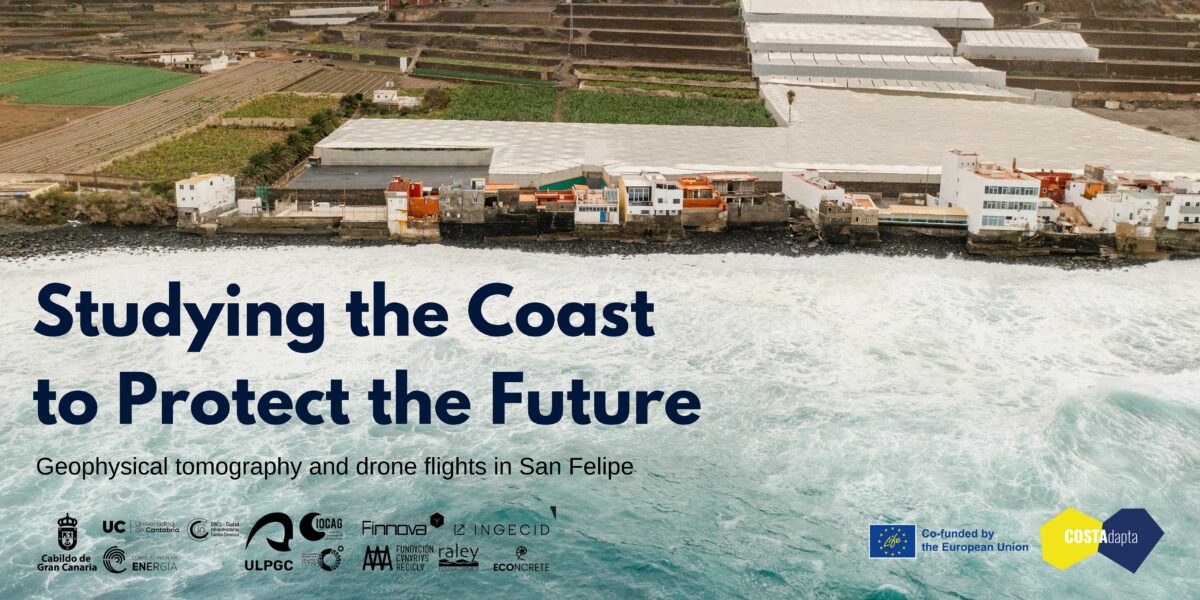
The coast of San Felipe, in Santa María de Guía (Gran Canaria), will be the setting for the development of these nature-based solutions that will generate reefs to help stabilize the beach in the face of rising sea-levels. A prototype that will help protect and prevent the loss of housing and infrastructure from climate change by ensuring that future generations will be able to enjoy the neighborhood as it is known today.

With a duration of seven years and a total budget of EUR 3,409,864 (EUR 2,045,818 subsidised by the EU through the LIFE Programme), COSTAdapta seeks to implement this innovative system, demonstrating its operation and effectiveness under certain conditions. As a result, it aims to obtain a working methodology that can be replicated in other areas at risk from the effects of rising sea-levels. This replication is not only intended for Gran Canaria but also for the rest of the islands of the archipelago and other outermost regions such as Madeira and the Azores.

Climate change and rising sea-levels are stark realities facing our coastal regions. Preserving these shores demands collective effort. At LIFE COSTAdapta, we’re already riding the wave to safeguard our coasts!

Categories
News

The LIFE COSTAdapta consortium presents to the neighbors of Santa María de Guía the European project of coastal protection against climate change.

  • LIFE COSTAdapta addresses the adaptation of the coast of Gran Canaria to sea level rise and could become a reference for coastal areas suffering the consequences of strong waves.
  • The Cabildo de Gran Canaria leads, through the CIEGC, this seven-year project with a budget of 3,409,864 euros. 

Several partners of the European LIFE COSTAdapta project, led by the Councilor for Environment, Climate, Energy and Knowledge of the Cabildo de Gran Canaria, Raúl García Brink, met on Friday afternoon, April 12, with the Mayor of Santa María de Guía, Pedro Manuel Rodríguez, and with representatives of the Association of Neighbours of San Felipe. The objective was to explain them in person the work being developed through the European project LIFE COSTAdapta, which aims to address the adaptation of the coast of Gran Canaria to sea level rise. 

The meeting was also attended by the Councilor for Environment and Coastal Affairs of the municipality, Tanausú Santos, the mayor of Urban Planning, César Medina, as well as researchers from the University of Las Palmas de Gran Canaria (ULPGC) and the University of Cantabria (UC).

García Brink pointed out that one of the main known effects of climate change for the Canary Islands, due to their insular condition, will come from the sea. “We must anticipate and take measures that allow us to minimize the impact of coastal phenomena and rising sea levels to safeguard the populations that are on the front line”.  In this sense, he explained that this R+D+i project is being carried out on the coast of San Felipe and seeks to develop nature-based solutions that will allow us to generate reefs to help us better stabilize our beaches in the face of rising sea levels. 

He also thanked the municipal team and the neighbors for their collaboration, assuring that “we will hold future informative meetings with different groups in the area, such as surfers, since citizen collaboration is vital for this pioneering initiative”. This LIFE project aims to become a reference and be replicated in those coastal areas that suffer the consequences of strong waves.

Pedro Manuel Rodríguez thanked the Cabildo for choosing San Felipe as the first area to develop this important European project, “which will help protect and prevent the loss of housing and infrastructure from climate change, ensuring that future generations will be able to enjoy the neighborhood as we know it today”.

Progressive tidal pool-reef system

The main objective of the LIFE COSTAdapta project is to address the adaptation of the coast of Gran Canaria to sea level rise through an innovative methodology. To this end, a progressive tidal pool-reef system will be designed and tested, combining traditional tidal pool construction techniques with advanced solutions. This will contribute to the progressive adaptation of the coast of Gran Canaria to climate change, crucial given the high vulnerability of the Canary Islands to climate impacts, including sea level rise.

In addition to strengthening the resilience of coastal zones, LIFE COSTAdapta seeks to conserve habitats characteristic of these areas and protect the local tourism economy. The project will ensure economic sustainability by providing solutions to flooding and maintaining the region’s tourist attraction, which in turn will promote coastal stability. 

With a duration of seven years and a total budget of EUR 3,409,864 (EUR 2,045,818 subsidized by the EU through the LIFE Program), COSTAdapta is a project coordinated by the Gran Canaria Island Energy Council (CIEGC) of the Cabildo de Gran Canaria with the support of seven partners: the University of Las Palmas de Gran Canaria (ULPGC); the University of Cantabria (UC); INGECID, Research and Project Development; Raley Estudios Costeros S. C.P.; ECOncrete AQUA; Fundación Canaria para el Reciclaje y Desarrollo Sostenible (FCR) and Fundación Finnova.