COSTAdapta

Categories
News

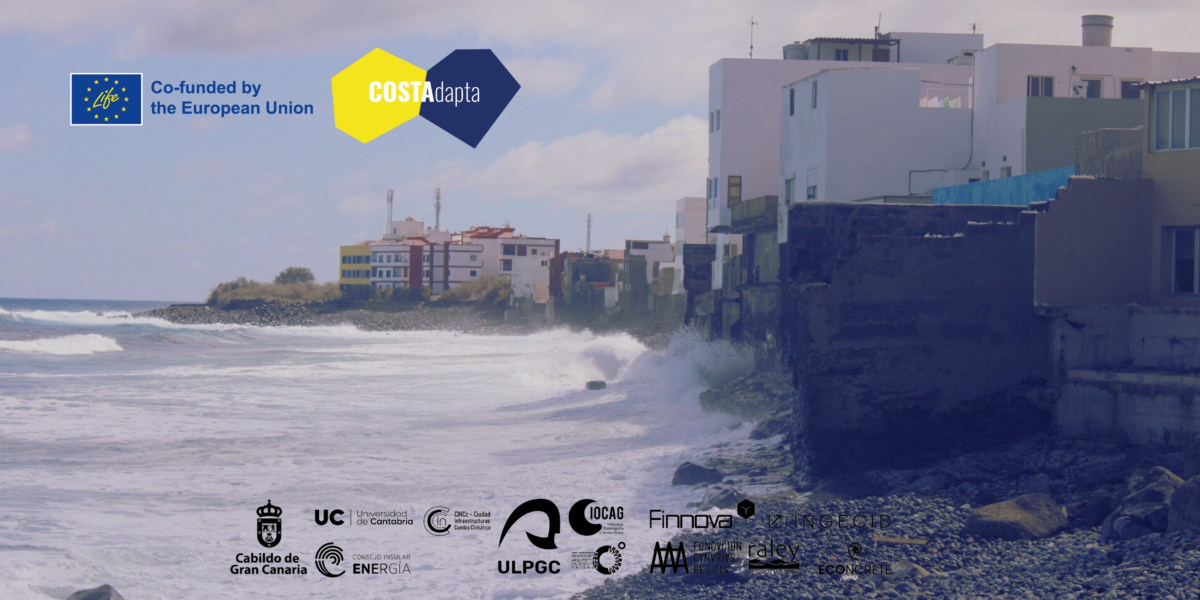
Consequences of Coastal Erosion

A few days ago, we analysed the causes of coastal erosion, a phenomenon that endangers many beaches in the Canary Islands. Today, we are going to analyse its consequences, which affect both the environment and human communities. These consequences can be economic, social and ecological.
Coastal erosion is a natural process by which coasts lose sediments and rocks due to the action of waves, currents and wind. The main consequences of coastal erosion are:
Economic Consequences

  1. Loss of Property and Infrastructure:
    o Destruction of Buildings: Houses, hotels, and other buildings located near the coast may be damaged or destroyed.
    o Damage to Infrastructure: Roads, bridges, sewage systems and other essential infrastructure may suffer costly damage.
  2. Impact on Tourism:
    o Reduction of Beaches: Erosion can reduce the size of beaches, affecting the main tourist attraction in many coastal areas.
    o Loss of Tourist Attractions: Natural monuments and other attractions may be eroded or damaged.
  3. Impact on the Local Economy:
    o Fishing: Erosion can alter marine habitats, affecting fishing productivity.
    o Coastal agriculture: Agricultural land near the coast may be inundated by seawater, affecting production.
    Social Consequences
  4. Displacement of Communities:
     Forced Relocation: Coastal communities may be forced to relocate due to loss of land and risk of flooding.
     Impact on Housing: Loss of coastal property may leave people homeless and without livelihoods.
  5. Loss of Cultural Heritage:
     Archaeological and Cultural Sites: Erosion can destroy historical and cultural sites located near the coast.
     Community Identity: Communities may lose part of their identity and cultural heritage as they are displaced.
  6. Food Security: Communities that depend on fishing and other marine activities may see their food security compromised due to the degradation of marine ecosystems.
    Ecological Consequences
  7. Destruction of Natural Habitats:
     Marine Ecosystems: Erosion can damage coral reefs, seagrasses and other essential marine habitats.
     Coastal Vegetation: The loss of mangroves, dunes and other coastal vegetation affects numerous species that depend on these habitats.
  8. Loss of Biodiversity:
     Threatened Species: Erosion can lead to the disappearance of species that exclusively inhabit coastal areas.
     Ecosystem Alteration: Changes in ecosystem structure can have knock-on effects, affecting multiple species.
    Environmental Consequences
  9. Pollution:
     Runoff and Sediment: Erosion can increase the amount of sediment and pollutants reaching the sea, affecting water quality.
     Salinisation Pollution: Saltwater intrusion into aquifers and agricultural land can affect drinking water supplies and agricultural productivity.
  10. Alteration of Natural Processes:
     Sedimentation Cycles: Disruption of natural sedimentation cycles may affect the formation of beaches and dunes.
     Impact on Coastal Morphology: The shape and structure of the coastline can change drastically, altering the natural dynamics of the region.
    3. Habitat Loss: Coastal erosion can destroy critical habitats for a variety of species, including birds, fish and other marine life. This can lead to a decrease in biodiversity and affect local ecosystems.
  11. Ecosystem Degradation: Mangroves, salt marshes and coral reefs, which protect coastlines and provide important ecological services, can be degraded or destroyed.
  12. Increased Water Turbidity: Erosion can increase the amount of sediment in the water, which affects water quality and can damage aquatic ecosystems.
    Increased Vulnerability to Natural Disasters
  13. Flooding: Loss of natural barriers such as dunes and mangroves can increase the vulnerability of coastal areas to flooding and storms.
  14. Storms and storm surges: Without the natural protection provided by beaches and other coastal ecosystems, communities may be more vulnerable to the impacts of storms and storm surges.
    Coastal erosion has multiple and serious consequences that affect both the environment and human communities. It is crucial to implement a combination of mitigation and adaptation strategies to protect coasts, preserve ecosystems and ensure the well-being of coastal communities.
    Coastal erosion has multiple and serious consequences that affect both the environment and human communities. It is crucial to implement a combination of mitigation and adaptation strategies to protect coasts, preserve ecosystems and ensure the well-being of coastal communities. An example of this is proposed in the LIFE COSTAdapta project, which will address the adaptation of the coast of Gran Canaria to sea level rise through an innovative methodology. To this end, a progressive tidal pool-reef system will be designed and tested, combining traditional tidal pool construction techniques with advanced solutions.
    This will contribute to the progressive adaptation of the Gran Canaria coast to climate change, crucial given the high vulnerability of the Canary Islands to climate impacts, including sea level rise. In addition to strengthening the resilience of coastal areas, LIFE COSTAdapta aims to conserve habitats characteristic of these areas and protect the local tourism economy. The project will ensure economic sustainability by providing solutions to flooding and maintaining the region’s tourist attraction, which in turn will support coastal stability.
    The project, with a duration of 7 years and a total budget of 3,409,864 EUR (2,045,818 EUR subsidised by the European Union through the LIFE Programme), is coordinated by the Gran Canaria Island Energy Council (CIEGC) of the Cabildo de Gran Canaria, with the support of 7 partners: University of Las Palmas de Gran Canaria (ULPGC); University of Cantabria (UC); INGECID, Research and Project Development; Raley Estudios Costeros S. C.P.; ECOncrete AQUA; Fundación Canaria para el Reciclaje y Desarrollo Sostenible (FCR) and Fundación Finnova.
Categories
News

Main causes of coastal erosion

Did you know?
Climate change and coastal erosion are closely linked, and their interactions have significant implications for coastal areas and the communities living there.

Coastal erosion is the process by which coasts lose land through the action of waves, currents and wind. This process can be natural, but can also be aggravated by human activities and climate change.

The main causes of coastal erosion are:

Natural Factors

1. Wave and ocean currents:

  • Wave action: waves, especially during storms and storm surges, have enormous energy that can displace sediments and erode shorelines.
  • Ocean currents: coastal currents and rip currents can transport sediment along the coast, causing erosion in some areas and accumulation in others.

2. Tides and sea level rise:

  • High tides: High tides can cover wider areas of the beach, eroding coastal soil and dunes.
  • Sea level rise: climate change is causing sea levels to rise, which aggravate erosion by submerging more coastal areas and increasing wave action on the coast.

3. Storms and cyclones:

  • Extreme weather events: tropical storms and cyclones generate large waves and strong storm surges that can cause significant erosion in a short period of time.

4. Changes in climate and precipitation:

  • Precipitation patterns: heavy rainfall can cause surface water flows that washes sediment out to sea, contributing to coastal erosion.
  • Droughts: droughts can destabilise coastal vegetation, reducing its ability to protect the coast from erosion.

Human Factors

1. Coastal development and urbanisation:

  • Coastal construction: buildings, roads and other infrastructure in coastal areas can alter natural patterns of sedimentation and erosion.
  • Sand and mineral extraction: the extraction of sand from beaches and dunes for industrial and construction uses reduces the amount of sediment available to protect the coast.

2. Recreational activities and tourism:

  • Pedestrian and vehicular traffic: human and vehicular traffic over dunes and beaches can damage vegetation and destabilise sediments, facilitating erosion.
  • Tourist facilities: the construction of hotels and other tourist facilities near the coast can increase vulnerability to erosion.

3. Changes in land use:

  • Deforestation and agriculture: removal of forests and conversion of land for agriculture can increase surface water flows and reduce soil stability, contributing to coastal erosion.

Mitigation Measures

To mitigate coastal erosion, several strategies can be implemented, such as the one proposed by the LIFE COSTAdapta project. To address the adaptation of the coast of Gran Canaria to sea level rise, a progressive tidal pool-reef system will be designed and tested, combining traditional tidal pool construction techniques with advanced solutions. This will contribute to the progressive adaptation of the coast of Gran Canaria to climate change, crucial given the high vulnerability of the Canary Islands to climate impacts.

In addition to strengthening the resilience of coastal areas, LIFE COSTAdapta aims to conserve habitats characteristic of these areas and protect the local tourism economy. The project will ensure economic sustainability by providing solutions to flooding and maintaining the region’s tourist attraction, which in turn will support coastal stability.

With a duration of seven years and a total budget of EUR 3,409,864 (EUR 2,045,818 subsidised by the EU through the LIFE Programme), COSTAdapta is a project coordinated by the Gran Canaria Island Energy Council (CIEGC) of the Cabildo de Gran Canaria with the support of seven partners: the University of Las Palmas de Gran Canaria (ULPGC); the University of Cantabria (UC); INGECID, Research and Project Development; Raley Estudios Costeros S. C.P.; ECOncrete AQUA; Fundación Canaria para el Reciclaje y Desarrollo Sostenible  and Fundación Finnova.

Categories
News

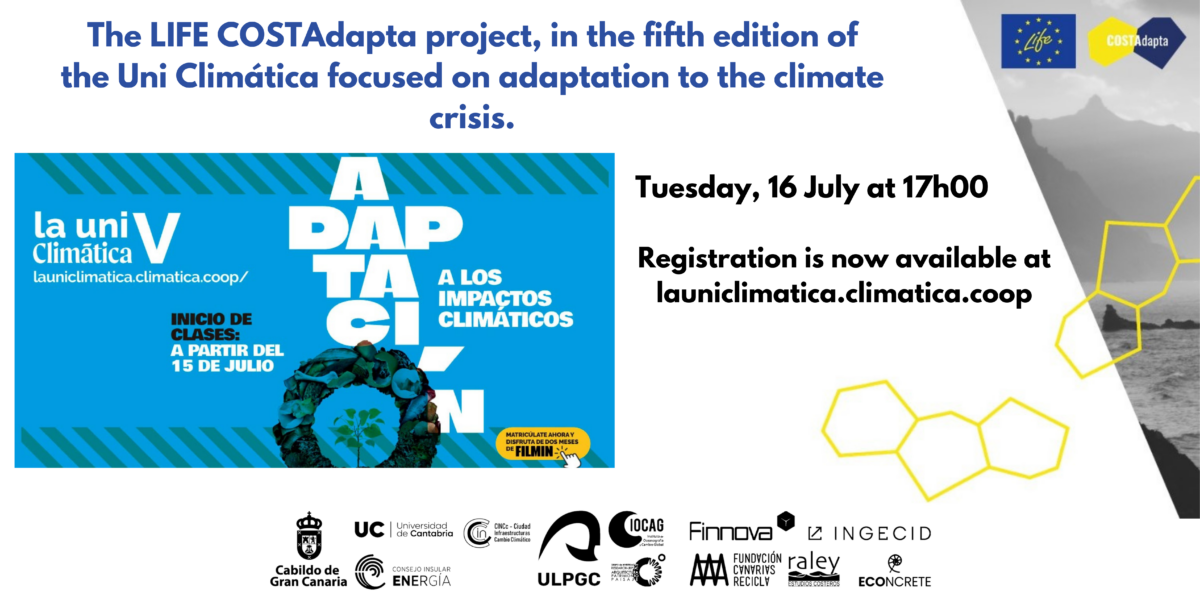
The LIFE COSTAdapta project, in the fifth edition of the Uni Climática focused on adaptation to the climate crisis.

  • The University of Las Palmas de Gran Canaria, partner of the project, will present the main objectives of LIFE COSTAdapta next Tuesday, July 16, at 17h00.
  • Some thirty specialists in climate, biodiversity, health, agriculture, food, cities and water will be present at this event.

The European LIFE COSTAdapta project will be present at Uni Climática, an event that will be held from 15 to 19 July 2024 and will focus on specialised training in climate and biodiversity. In this fifth edition, Uni Climática is dedicated to adaptation to the impacts of climate change.

On 16 July at 17h00, Patricia Caro Ruiz, from the University of Las Palmas de Gran Canaria, member of the coordination team of the LIFE COSTAdapta Project, will present the project that seeks to address the adaptation of the coast of Gran Canaria to sea level rise through an innovative methodology: the design and testing of an innovative and progressive tidal pool-reef system, which uses, partially, the traditional technique of building tidal pools, common elements in the Canary Islands and the rest of Macaronesia, for the coastal adaptation of Gran Canaria to climate change.

Uni Climática, which opens its campus from 15 July 2024, will be divided into blocks to address adaptation from different angles: climate, biodiversity, agriculture, food, health, cities, water… To this end, master classes and lectures will be given by leading specialists with key concepts and ideas on how to adapt to climate phenomena that are already occurring. On the other hand, testimonies of adaptation experiences and projects will be presented to serve as inspiration for other people, communities and institutions.

Among the specialists already confirmed are British-Canadian Professor Ian Burton, a pioneer in promoting the concept of adaptation; Cristina Linares (Instituto de Salud Carlos III); Paco Heras (Spanish Office for Climate Change); Annelies Broekman (CREAF); Ana Lancho (Fundación Biodiversidad); Jonas Bull (Human Rights Watch); Ana Terra Amorim-Maia (BC3); Javier López Lara (IHCantabria); Marta G. Rivera-Ferre (INGENIO, CSIC-UPV); Esteban Rodríguez (AEMET); Javier Retana (CREAF); Patricia Klett (Spanish Climate Change Office); and Jofre Carnicer (CREAF).

Practical experiences

In addition to the theoretical classes, there will be several practical presentations to understand how it is possible to carry out the adaptation. Thus, the architect Pascual Pérez will teach what is necessary to adapt our home and environment. And there will be representatives from various national and European adaptation projects such as MasDunas, LIFE COSTAdapta; Anecoop, S.Coop (citrus cooperative coop); Bloques en Transición, Barrios por el clima, LIFE-myBUILDINGisGREEN, MountResilience, and the climate shelter project refugio climático of the Círculo de Bellas Artes de Madrid.

Special contents

Uni Climática V will include special contents that can only be enjoyed during the week of 15-19 July, such as participation in the film forum and direct contact with specialists through the classroom forum. In addition, there will be several live online lectures, including one by meteorologist Antonio Sánchez (Televisa-Univision, United States) on Wednesday 17 at 19:00 (Madrid time) on adaptation and resilience in the face of hurricanes.

After this first week, the training material will continue to be available with no expiry date.

Climate film forum

This edition has a new feature and that is the alliance of La Uni Climática with Filmin, the online film platform. Each student* will receive with their registration a free two-month subscription to Filmin and a recommended list of climate films.

Throughout July and August we will be holding several online film forums to discuss the films featured in the programme. All students can participate in these discussions.

*This promotion only applies to enrolments made before 31 August 2024.

Registration is now open

Registration is now available at launiclimatica.climatica.coop, where you will also find more information about the lectures and participating experts.