COSTAdapta

Categories
News

The University of Cantabria presents the LIFE COSTAdapta project at the conference “Urbanism for climate action and ecological transition”

  • Coastal protection and climate adaptation for the Canary Islands are the key objectives of the project

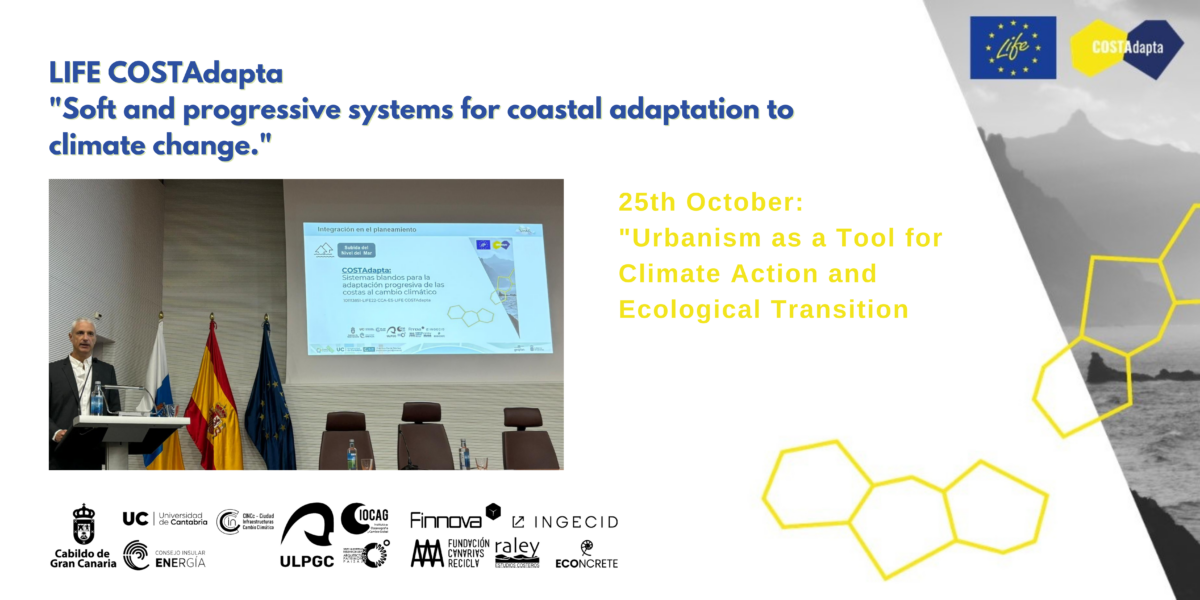
The University of Cantabria (UC) presented last Friday, October 25, the progress and objectives of the LIFE COSTAdapta project at the event “Urbanism as a tool for climate action and ecological transition”. The conference, organised in collaboration with the Gran Canaria Island Energy Council (CIEGC), Finnova and the University of Las Palmas de Gran Canaria (ULPGC), underlined the role of urban planning as a driver of climate resilience in coastal areas.
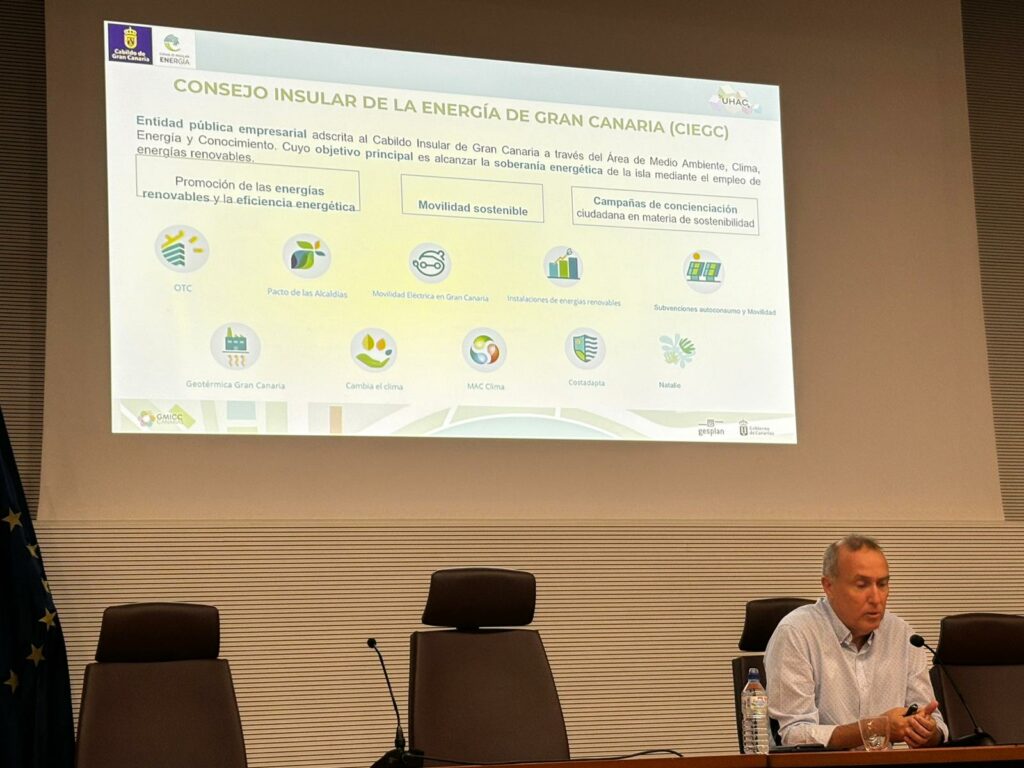
During the event, Francisco José García (UC) highlighted the value of LIFE COSTAdapta to address one of the greatest challenges for the region, the rise in sea level. For her part, Patricia Caro, head of the ULPGC, explained how the project’s actions are aligned with the Climate Change Adaptation Plan, an essential strategy for the Canary Islands. The intervention of Alexis Lozano, representing the CIEGC, highlighted the long-term impact of LIFE COSTAdapta on the stability and sustainability of the Canary coasts.

About LIFE COSTAdapta

The LIFE COSTAdapta project, coordinated by the Island Energy Council of Gran Canaria (CIEGC) and with a duration of seven years, has a budget of €3,409,864 (60% co-financed by the LIFE Programme of the European Union). Its goal is to develop an innovative tidal puddle reef methodology that combines traditional and modern techniques to strengthen coastal protection and conserve both the natural environment and the tourism economy.

LIFE COSTAdapta is supported by a consortium of strategic partners, including: the University of Las Palmas de Gran Canaria (ULPGC), the University of Cantabria (UC), INGECID, Research and Project Development, Raley Estudios Costeros S.C.P., ECOncrete AQUA, Fundación Canaria para el Reciclaje y Desarrollo Sostenible (FCR), and the Finnova Foundation.

For more information about the event, see the link to the conference.
Categories
News

LIFE COSTAdapta reinforces the resilience of the coast of Gran Canaria: a balance of the last few months

  • With a budget of €2409,864, this European project seeks to create a progressive system of reefs-tidal pools
  • The consortium celebrates the International Day against Climate Change by reinforcing its commitment to the protection of coastal areas

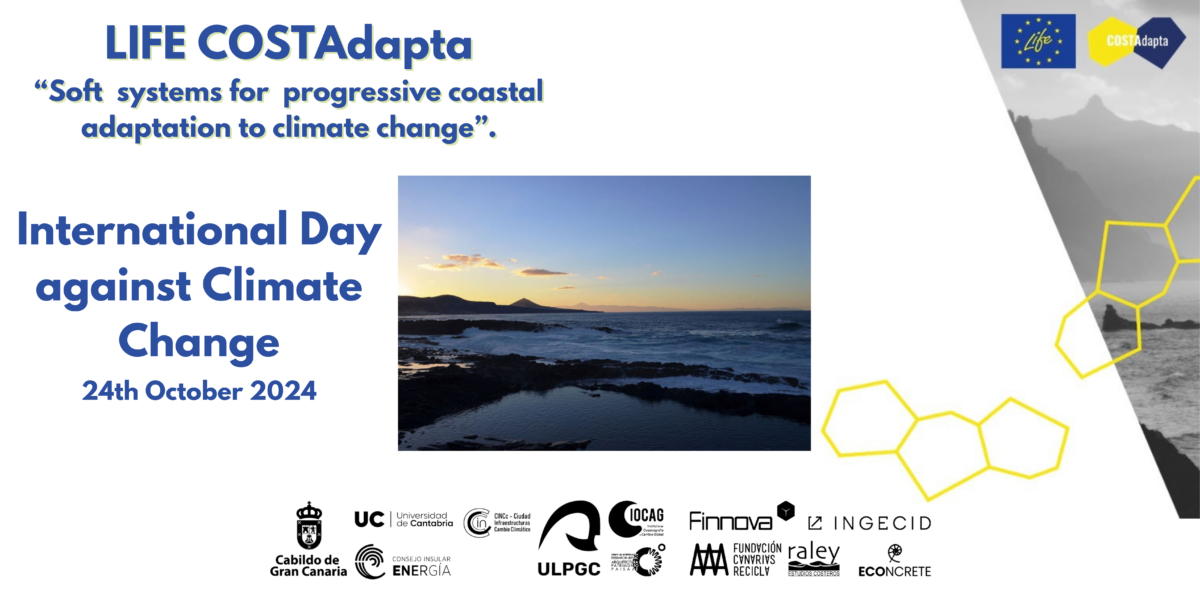
Coinciding with the International Day against Climate Change, today, October 24, we want to remember the progress made within the framework of the LIFE COSTAdapta project, whose objective is to adapt the coast of Gran Canaria to the rise in sea level through natural and sustainable solutions.

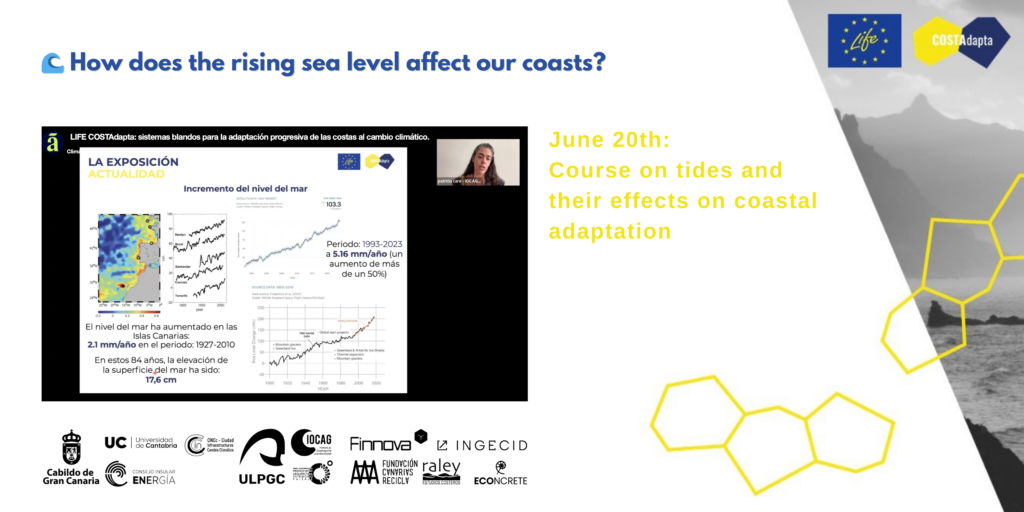
In recent months, LIFE COSTAdapta has taken significant steps in its mission to protect the Canary Islands coastline against the impacts of climate change. During the month of June, two important training courses were held for sustainability professionals and experts in coastal management. These courses focused on advanced techniques for building Tidal pool-reefs, an innovative method that partially uses traditional practices of the Canary Islands, strengthening the adaptive capacity of the coast.

Attendees were able to learn first-hand how this technique not only mitigates the impact of rising sea levels, but also promotes the creation of natural habitats and preserves the local economy. The courses trained key professionals to implement these solutions in other vulnerable areas of the island.

A project of impact and future

With a total duration of seven years and a budget of €3,409,864, LIFE COSTAdapta is 60% co-financed by the European Union’s LIFE Programme. During this time, the aim is not only to create a progressive system of reefs-tidal pools, but also to generate practical knowledge for its application in other European coastal territories.

In a context where the Canary Islands are particularly vulnerable to the effects of climate change, this project not only represents an innovative effort in the protection of coastal areas, but also secures the future of a tourism-based economy, crucial for the region.

The next few months will be key for the implementation of the first phases of the reef-tidal puddle system on the coast of Gran Canaria. This initiative seeks to guarantee environmental sustainability, in addition to promoting public awareness of the importance of adopting innovative and natural solutions to climate change.

LIFE COSTAdapta will continue its work with the support of the Cabildo de Gran Canaria, the Consejo Insular de Energía de Gran Canaria (CIEGC) and a consortium of expert institutions, such as the University of Las Palmas de Gran Canaria (ULPGC) and the University of Cantabria (UC), among other key partners.

For more information, you can visit https://costadapta.energiagrancanaria.com/

Categories
News

LIFE COSTAdapta celebrates its second monitoring meeting to analyze project progress

  • The project’s partners inspected the study area and other northern regions of Gran Canaria affected by coastal erosion, visiting natural pools and protective structures that are part of the study.
  • Progress was assessed in mapping, participatory diagnostics, and the implementation of sustainability measures to replicate coastal protection solutions.

On September 12 and 13, 2024, the second coordination meeting of the LIFE COSTAdapta project took place in Gran Canaria, providing a platform to analyze advancements in coastal protection efforts in the region. The meeting was held in a hybrid format (in-person and online), allowing project partners to discuss progress and coordinate the next steps for LIFE COSTAdapta.

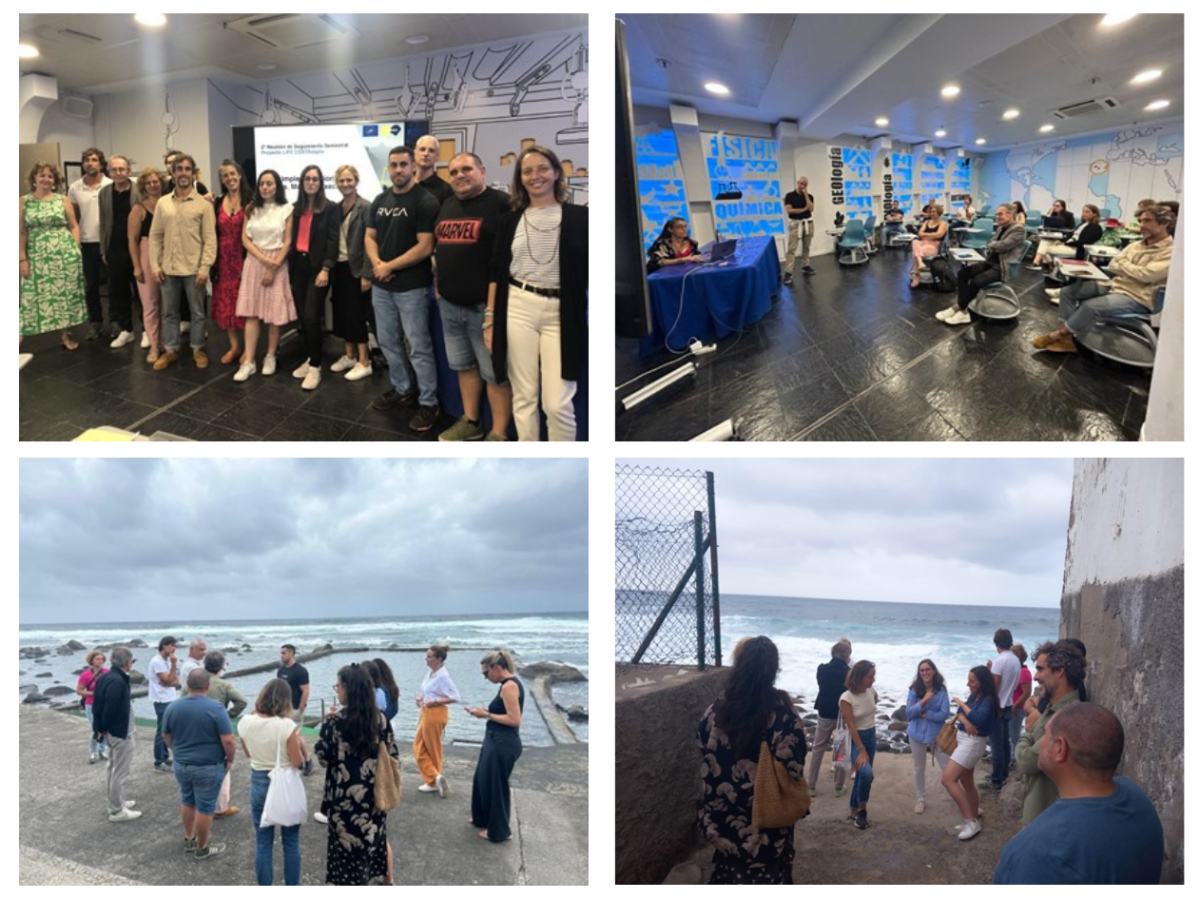
During the first day, partners visited the study area along the coast of San Felipe and other northern areas of Gran Canaria, such as “El Puertillo,” affected by coastal erosion. Various natural pools and other protective infrastructures against climate change impacts were evaluated during the visit.

The second day of the meeting was held at the Elder Museum in Las Palmas de Gran Canaria, where participants reviewed the project’s overall status. Updates on preparatory actions were presented, and the leading partners of the work packages explained the current status of these and their deliverables, with a special focus on mapping and the analysis of the affected study areas. The importance of participatory diagnostics in developing effective solutions was also highlighted, as well as the implementation of new practices through innovative and sustainable technologies.

Progressive Tidal Pool-Reef System

The main objective of the LIFE COSTAdapta project is to address the adaptation of Gran Canaria’s coast to rising sea levels through innovative methodologies. To this end, a progressive tidal pool-reef system will be designed and tested, combining traditional tidal pool construction techniques with advanced solutions. This will contribute to the progressive adaptation of Gran Canaria’s coast to climate change, which is crucial given the high vulnerability of the Canary Islands to climate impacts, including sea-level rise.

In addition to strengthening the resilience of coastal areas, LIFE COSTAdapta aims to conserve characteristic habitats of these areas and protect the local economy. The project will ensure economic sustainability by providing flood solutions and maintaining the region’s tourist appeal, which, in turn, will support coastal stability.

With a duration of seven years and a total budget of €3,409,864 (of which €2,045,818 is funded by the EU through the LIFE Programme), COSTAdapta is coordinated by the Gran Canaria Island Energy Council (CIEGC) with the support of seven partners: the University of Las Palmas de Gran Canaria (ULPGC); the University of Cantabria (UC); INGECID, Research and Project Development; Raley Coastal Studies S.C.P.; ECOncrete AQUA; the Canary Foundation for Recycling and Sustainable Development (FCR); and the Finnova Foundation.