COSTAdapta

Categories
News

LIFE COSTAdapta: A project defending the coast from the effects of climate change

  • Through a demonstrator that mimics natural solutions such as reef–tidal pool systems, it aims to reduce erosion caused by rising sea levels.
  • The LIFE COSTAdapta project continues to make progress toward its goal of offering sustainable solutions to protect the coastline against climate change. It is currently in the preliminary design phase of the demonstrator.

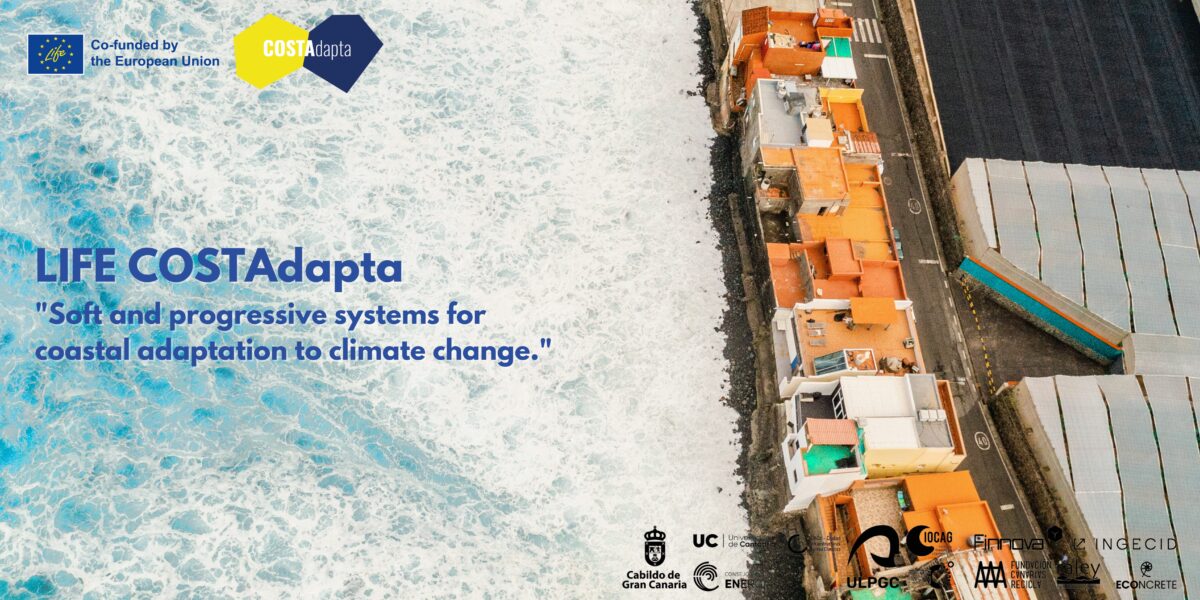
Brussels, 30 May 2025. LIFE COSTAdapta is a European project born in response to the increasing urgency of adapting to climate change and its growing impacts, such as coastal erosion, the loss of marine ecosystems, and damage to infrastructure. The project is being carried out on the coast of San Felipe, in the municipality of Santa María de Guía (Gran Canaria), where work is underway on the preliminary design of a demonstrator that will help reduce erosion without compromising wave quality.

LIFE COSTAdapta proposes an intervention inspired by natural solutions such as reefs, sandbanks, or berms, designed to absorb part of the wave energy and reduce its impact on land and buildings. Studies carried out so far—based on physical and digital modeling, on-site data collection, and topographic surveys—have enabled progress on a design that seeks to balance coastal protection with the conservation of the natural environment and the social and recreational uses of the coast.

“The current situation highlights the importance of adopting soft and preventive measures against adverse coastal events. Today, we have the opportunity to implement solutions that mitigate erosion and protect the shoreline without resorting to major construction. Failing to act now could result in the future need to build hard infrastructure requiring greater investment, such as a promenade that reflects wave energy and interferes with water sports—especially in areas already in urgent need of action, such as the Circo zone,” said Raúl García Brink, Councillor for Environment, Climate, Energy, and Knowledge of the Island Council of Gran Canaria.

Through participatory events and surveys, the project has gathered opinions, concerns, and suggestions that have guided the design of the demonstrator. The results reflect widespread concern over existing material damage to the coast and the growing exposure to storms. One comment collected during a survey stated:

“The road network, urban infrastructure, and power grid are affected, posing a constant burden for residents and a Civil Protection issue.”

These contributions have been key to designing an intervention that considers both technical aspects and local priorities.

About LIFE COSTAdapta

LIFE COSTAdapta is a seven-year climate change adaptation project with a total budget of €3,409,864, of which €2,045,818 is funded by the European Union through the LIFE Programme. It is coordinated by the Gran Canaria Island Energy Council (CIEGC) of the Island Council of Gran Canaria and involves seven partner entities: the University of Las Palmas de Gran Canaria (ULPGC), the University of Cantabria (UC), INGECID, Raley Estudios Costeros S.C.P., ECOncrete AQUA, the Canary Foundation for Recycling and Sustainable Development (FCR), and the Finnova Foundation.
Categories
News

LIFE COSTAdapta presents Gran Canaria’s solutions for a more resilient and safe coastal future in Wroclaw, Poland

  • Raul Garcia and Alexis Lozano share their experience in climate adaptation at the European Forum of the Mission on Climate Change Adaptation
  • The Island Council and the LIFE COSTAdapta project attend the event held in Wroclaw, Poland

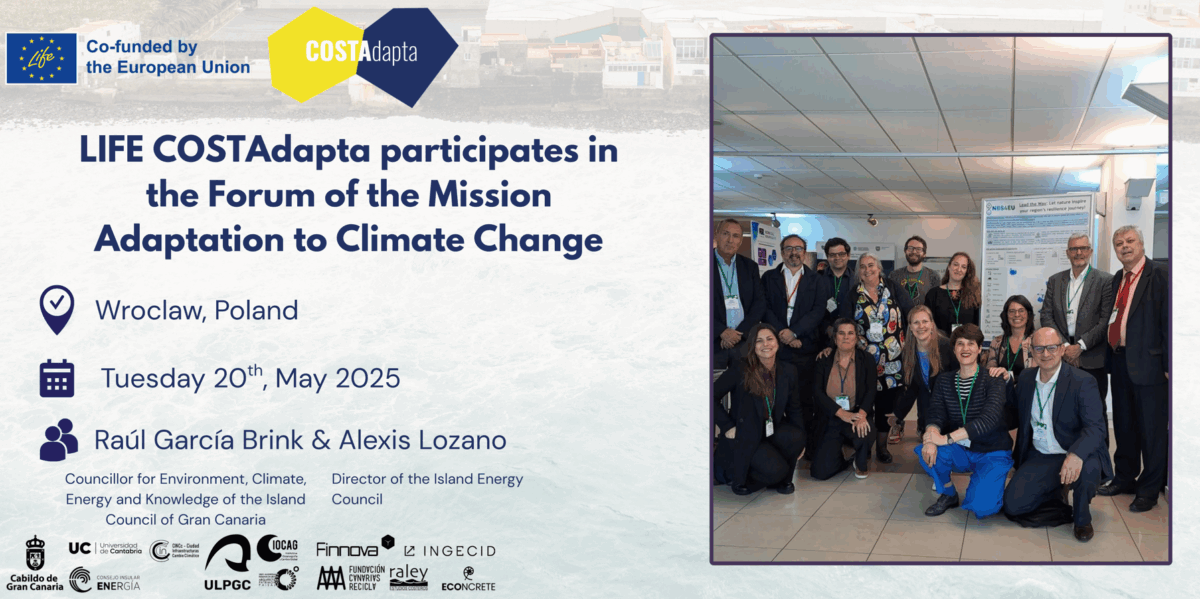
Brussels, May 21, 2025. Representatives of the Island Council of Gran Canaria took part on Tuesday, May 20, in the European Union’s Mission on Climate Change Adaptation Forum, held in the polis city of Wroclaw. At this international gathering, innovative strategies and solutions were shared to tackle the effects of climate change across Europe.

The Councillor for Environment, Climate, Energy and Knowledge, Raúl García Brink, along with the Director of the Island Energy Council, Alexis Lozano, presented the work being carried out in Gran Canaria to advance climate risk adaptation. In particular, they highlighted the efforts of the LIFE COSTAdapta project, driven by the Island Energy Council and funded by the European Union’s LIFE Programme.

During the forum, experiences were exchanged with other European regions that are also part of the Adaptation Mission, with the goal of identifying best practices and fostering cooperation networks. “We have held more than twenty technical meetings with the European Mission, which has allowed us to update our adaptation strategy and strengthen our local capabilities,” explained Raúl García Brink.

The Mission on Climate Change Adaptation Forum is a key event on the European climate resilience agenda. Organized by the European Commission and the Polish presidency of the EU Council, this annual meeting brings together representatives of local, regional, and national governments, as well as scientific institutions and social stakeholders committed to climate action. Its goal is to facilitate the exchange of experiences, identify innovative solutions, and advance a shared roadmap to address increasing climate risks. Gran Canaria’s participation in this forum reinforces its commitment to effective adaptation connected with science, citizens, and European policy.

The Mission on Climate Change Adaptation Forum is a key event on the European climate resilience agenda. Organized by the European Commission and the Polish presidency of the EU Council, this annual meeting brings together representatives of local, regional, and national governments, as well as scientific institutions and social stakeholders committed to climate action. Its goal is to facilitate the exchange of experiences, identify innovative solutions, and advance a shared roadmap to address increasing climate risks. Gran Canaria’s participation in this forum reinforces its commitment to effective adaptation connected with science, citizens, and European policy.

LIFE COSTAdapta develops nature-based solutions, such as the reef–tidal pool system, to reduce the impacts of climate change on coastal areas. These types of innovations help protect homes and infrastructure from rising sea levels, while promoting marine biodiversity and the local economy.

Participation in forums like this strengthens Gran Canaria’s role as a region committed to sustainability and climate resilience, and establishes LIFE COSTAdapta as a European benchmark in coastal adaptation.

About LIFE COSTAdapta

LIFE COSTAdapta is a project funded by the EU LIFE Programme with a total budget of €3,409,864. It is coordinated by the Island Energy Council of Gran Canaria and involves collaboration with universities and entities specializing in engineering and sustainability. Its innovative approach could serve as a reference for other European regions affected by erosion and sea level rise.

LIFE COSTAdapta includes contributions from experts such as INGECID, which provides expertise in sustainable engineering; the Universities of Las Palmas de Gran Canaria and Cantabria, offering knowledge in natural sciences; and Raley Coastal Studies, which conducts research to identify the most vulnerable coastal areas. Additionally, ECOncrete AQUA leads innovation in marine infrastructure, while the Canarias Recicla Foundation ensures sustainability in the Canary Islands. Finnova manages the project’s internal and external communications.

Categories
News

The LIFE COSTAdapta project participates in the 18th edition of the International Seminar on Sustainable Regions.

  • The event will be held in Vecindario, Gran Canaria on 14 and 15 May 2025.
  • This year’s edition will focus on rising temperatures and sea level rise.

The LIFE COSTAdapta project will participate in the 18th edition of the International Seminar on Sustainable Regions, to be held at the Victor Jara Theatre in Vecindario, Gran Canaria, on Wednesday 14 and Thursday 15 May 2025. Organised by the Mancomunidad del Sureste, the event will focus on two of the greatest socio-economic challenges related to climate change: rising temperatures and sea level rise.

Patricia Caro, Project Manager at the University of Gran Canaria, partner of the LIFE COSTAdapta project, will be in charge of presenting the project on Thursday 15 May at 18h50 at the round table ‘Sea level rise: a socio-economic challenge’. Caro will explain the main objectives of the European project, which proposes an innovative solution based on the implementation of tidal pool-reef, a hybrid infrastructure combining natural and bio-inspired elements, to protect the coast from the effects of climate change, especially sea level rise. This methodology seeks to strengthen the resilience of coastal ecosystems, generate favourable habitats for marine biodiversity and maintain the local identity of beaches, ensuring a balance between environmental protection, public use and tourist activity. 

Patricia Caro will share a table with Corinne Vitale, assistant professor of spatial planning and water governance at the Nijmegen School of Management (NSM), Radboud University, the Netherlands; Juan Ferrer, technician at the Climate Change and Environmental Information Service of the Government of the Canary Islands; Levi García, postdoctoral researcher at the University of Las Palmas de Gran Canaria; and Gustavo Herrera, project coordinator for early warning systems, weather observation, Internet of Things (IoT) and climate change impact modelling. The debate will be moderated by journalist Wendy Fuentes.

The conference, aimed at all citizens, will bring together experts, researchers, policy makers and representatives from the public and private sectors to discuss adaptation and mitigation strategies to address these challenges. Innovative points of view on resilient urban planning, protection of coastal ecosystems, climate risk management and carbon emission reduction will be addressed, with the aim of ensuring a sustainable future for our regions. Registration is free and can be done through the following link: https://seminariocomarcassostenibles.com/inscripcion

Categories
News

LIFE COSTAdapta continues environmental monitoring of San Felipe’s coast with new field campaigns

The European project uses drone flights and electrical resistivity tomography to study coastal dynamics and lay the groundwork for sustainable climate adaptation solutions

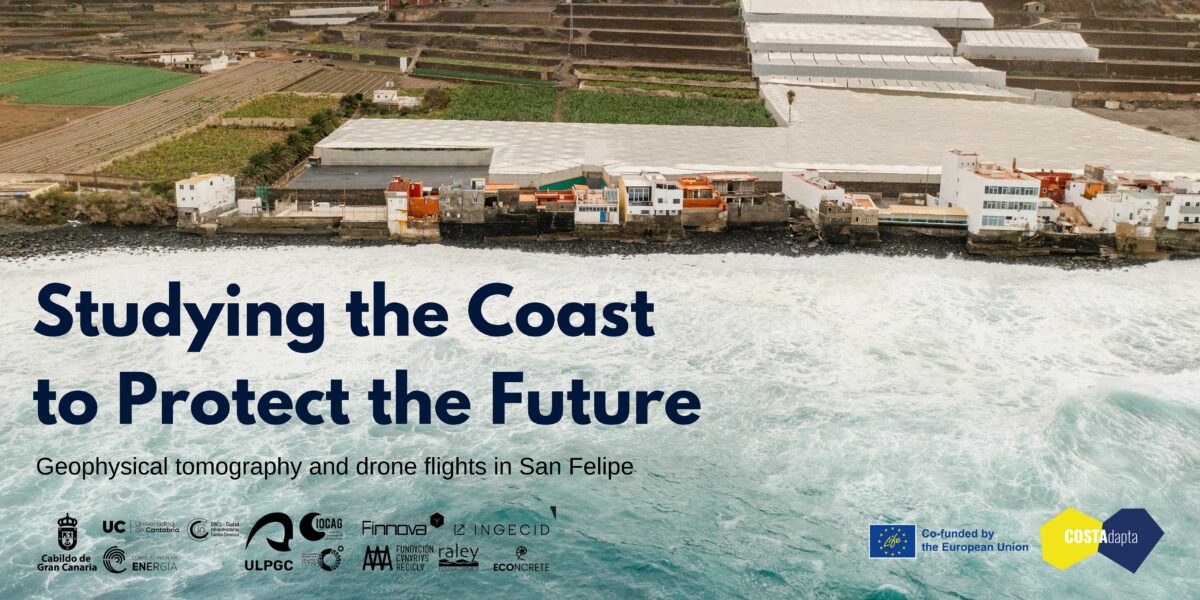
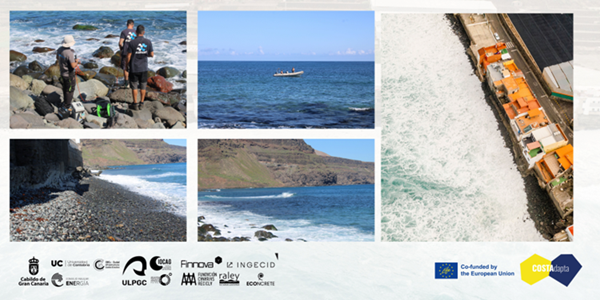
Brussels, 7th May 2025. The European project LIFE COSTAdapta, funded by the European Union’s LIFE Programme, continues its coastal observation and analysis strategy with new fieldwork in the San Felipe area of Gran Canaria. Following a drone flight conducted on Tuesday 15th April to study shoreline variability and evolution, the technical team has returned this week to document electrical resistivity tomography work—a technique used to analyse the characteristics of the coastal subsoil.

These actions are part of the project’s environmental monitoring system, aimed at assessing the natural behaviour of the coastline before and during the implementation of pilot measures. In collaboration with a PhD student from the University of Las Palmas de Gran Canaria (ULPGC), regular flights are planned—ideally every four months—to generate comparable data series that will feed into the project’s impact indicators.

LIFE COSTAdapta proposes an innovative solution based on the implementation of tidal pool-reefs: a hybrid infrastructure that combines natural and bio-inspired elements to protect coastal areas against the effects of climate change, especially sea level rise. This methodology aims to enhance the resilience of coastal ecosystems, create favourable habitats for marine biodiversity, and preserve the local identity of beaches—ensuring a balance between environmental protection, public use, and tourism.

The project spans seven years (2023–2030) with a total budget of €3,409,864, of which €2,045,818 is co-funded by the European Union through the LIFE Programme.

Coordinated by the Island Energy Council of Gran Canaria (CIEGC), the consortium comprises seven partners: University of Las Palmas de Gran Canaria (ULPGC), University of Cantabria (UC), INGECID, Raley Estudios Costeros, ECOncrete AQUA, Fundación Canaria para el Reciclaje y el Desarrollo Sostenible (Canarias Recicla), and Finnova Foundation.

These field activities, along with future ones, will allow LIFE COSTAdapta to gather essential data to scientifically validate its intervention methodology and facilitate its replication in other coastal areas facing similar challenges.

More information and project newsletter subscription: https://costadapta.energiagrancanaria.com/