The European project shares a comprehensive diagnosis of the coastal environment and outlines specific solutions to tackle climate change
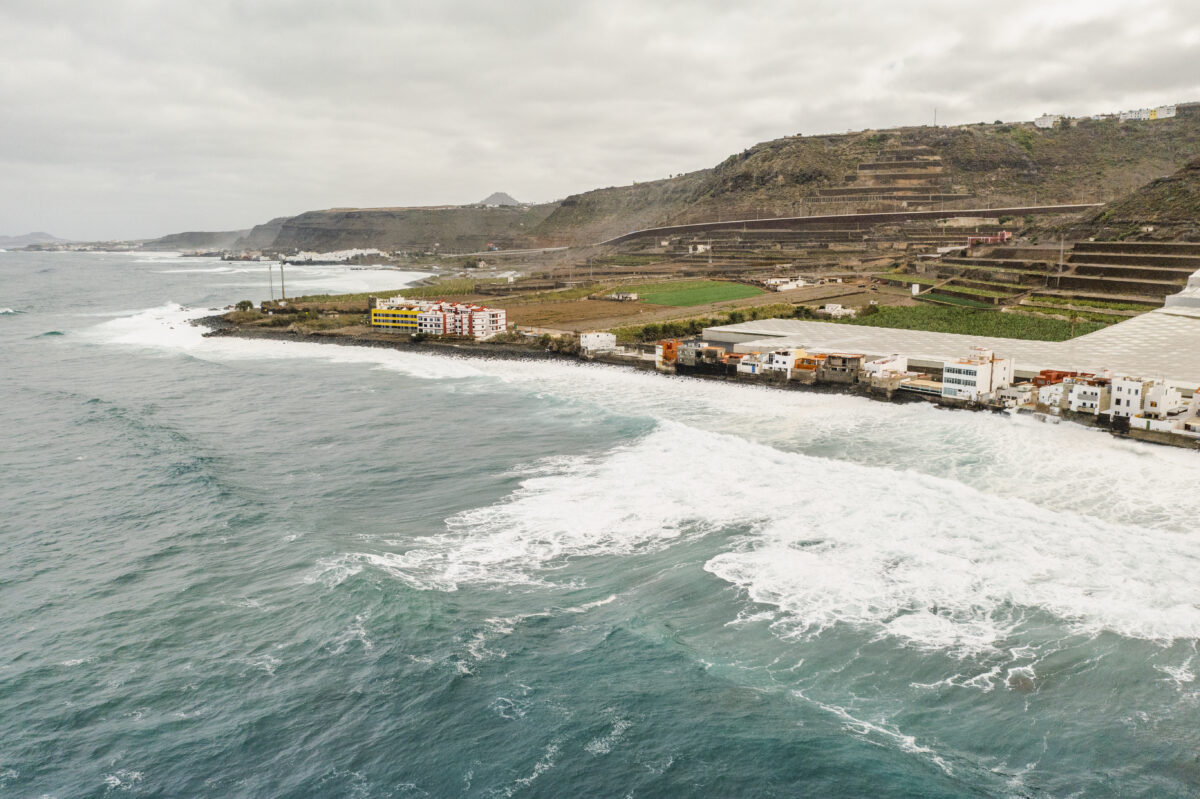
Brussels, 21 July 2025. The information panels presented during community meetings of the LIFE COSTAdapta project are now available on its official website. These materials provide an in-depth analysis of the current state of the San Felipe coastal area, its climate-related risks and the strategies proposed for adaptation.
The content covers historical, urban, environmental, heritage, social and climatic aspects. Key threats to the coastline are identified, including erosion, loss of biodiversity and rising sea levels. The panels also outline nature-based solutions, such as the design of tidal pool-reef systems inspired by traditional Canarian tide pools. These structures aim to protect the coastline while preserving its environmental, economic and social value.
LIFE COSTAdapta promotes an innovative model for coastal adaptation that merges traditional knowledge with advanced environmental engineering. Its main goal is to strengthen coastal resilience, improve residents’ quality of life and ensure the continuity of tourism-based economic activities.
The project has a total budget of €3,409,864, of which €2,045,818 is funded by the European Union through the LIFE Programme. It will run for 84 months and is coordinated by the Energy Council of Gran Canaria (CIEGC), in partnership with the University of Las Palmas de Gran Canaria (ULPGC), the University of Cantabria (UC), INGECID, Raley Estudios Costeros S.C.P., ECOncrete AQUA, the Canary Foundation for Recycling and Sustainable Development (FCR) and the Finnova Foundation.
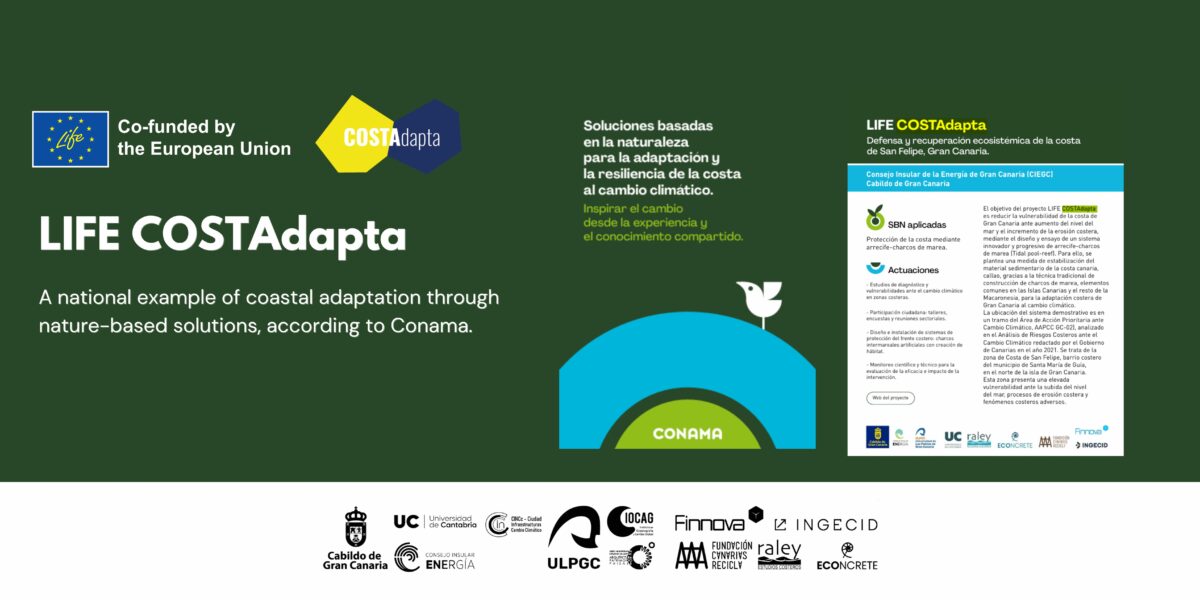
The Conama Foundation report highlights LIFE COSTAdapta as an innovative project for climate adaptation in coastal areas, alongside other leading initiatives such as Convive LIFE and the regeneration of El Saler beach.
Brussels, 11th July 2025. The European project LIFE COSTAdapta, coordinated by the Island Energy Council of Gran Canaria, has been recognised by the Conama Foundation as an inspiring example of coastal adaptation to climate change. The project is featured in the national report “Nature-based solutions for coastal adaptation and resilience to climate change”, which showcases case studies that demonstrate the effectiveness of sustainable coastal strategies in the face of sea level rise, erosion and habitat loss.
LIFE COSTAdapta stands out for its innovative methodology, combining traditional Canarian techniques with scientific advances through the progressive installation of tidal pool-reef systems. This nature-based infrastructure will be tested in San Felipe (Gran Canaria) to protect coastal ecosystems, preserve the economic and cultural value of local beaches, and strengthen the region’s tourism-dependent economy.
The project has been praised for its replicability, ecological value and support for blue economy initiatives. The report also emphasises the importance of social acceptance and public engagement, an area in which LIFE COSTAdapta integrates community voices and concerns, especially in areas popular for surfing and recreation.
With a total budget of €3,409,864 (60% co-funded by the EU LIFE Programme), the project runs for seven years (2023–2030). It is coordinated by the Island Energy Council of Gran Canaria and supported by seven partners: the Finnova Foundation, the University of Las Palmas de Gran Canaria (ULPGC), the University of Cantabria, INGECID, Raley Estudios Costeros, ECOncrete AQUA and the Canary Islands Foundation for Recycling and Sustainable Development (FCR).
Tomographic analysis identifies optimal areas for implementing nature-based solutions to climate change
Brussels, 4 July 2025. As part of the European project LIFE COSTAdapta, a 2D marine electrical tomography geophysical survey was carried out in May along the coast of San Felipe, in the municipality of Guía (Gran Canaria). This study allowed for the characterization of the marine subsoil down to a depth of 15 metres, identifying layers with loose materials and high porosity, which may be suitable for the future implementation of the progressive reef–tidal pool system, the central focus of the project.
The method used, non-intrusive and based on resistivity models, enabled the inference of the presence of gravels, sands, and cobbles with a high concentration of interstitial water, as well as areas with more compact rocky substrate. This information is essential for planning interventions that help adapt the coastline to rising sea levels through nature-based solutions, without altering local coastal uses or its touristic value.
The technical report includes six tomographic profiles and a georeferenced 3D model of the underwater terrain. The results have been integrated into the planning of the coastal adaptation system, which aims to reduce erosion, preserve coastal habitats, and improve climate resilience along the northern coast of Gran Canaria.
With a total budget of €3,409,864 and a duration of 84 months, LIFE COSTAdapta is co-funded at 60% by the European Union’s LIFE Programme. The project is coordinated by the Island Energy Council of Gran Canaria (CIEGC), with the participation of Finnova Foundation, the University of Las Palmas de Gran Canaria (ULPGC), the University of Cantabria (UC), ECOncrete, INGECID, Raley Estudios Costeros, and the Canary Islands Foundation for Recycling and Sustainable Development.
LIFE COSTAdapta is part of the European Union’s broader commitment to promoting sustainable, replicable and socially responsible adaptation solutions for the most climate-vulnerable coastal areas.
The 2025 edition of the forum takes place in Rotterdam with a clear objective: accelerating resilience action across Europe
From Rotterdam, Patricia Caro presents the scientific and technical approach that drives LIFE COSTAdapta as a scalable model within the EU
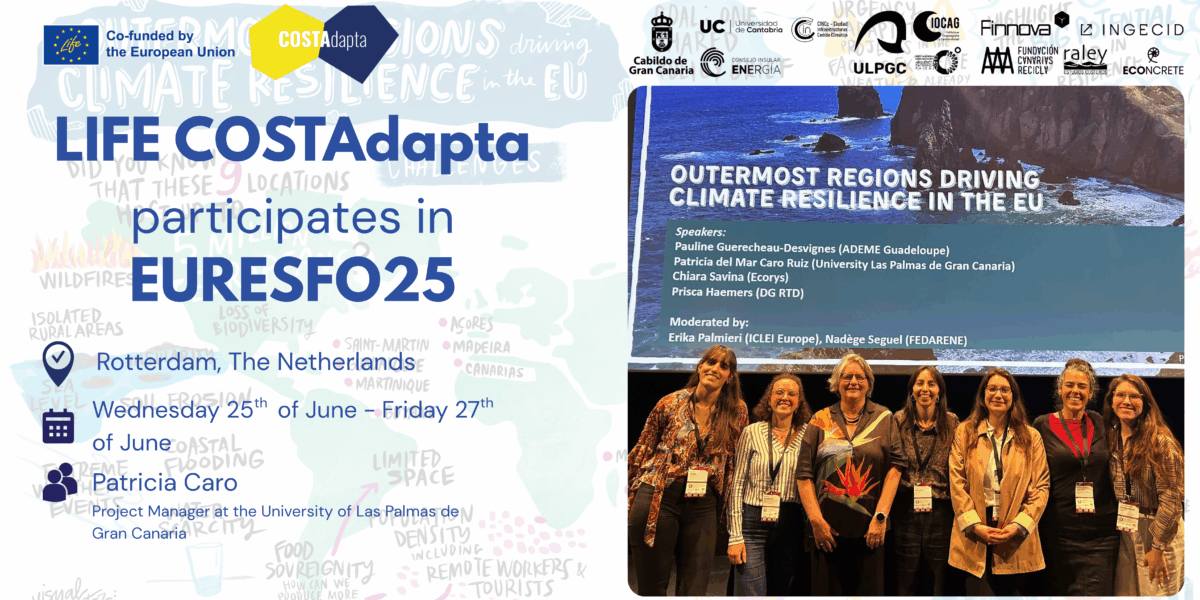
Brussels, 1 July 2025. Patricia Caro, project manager at the University of Las Palmas de Gran Canaria, took part in the 12th edition of the European Urban Resilience Forum (EURESFO25), held from Wednesday 25th of June to Friday 27th of June in Rotterdam, the Netherlands. Representing theLIFE COSTAdaptaproject, she presented to an audience of experts in urban resilience, climate adaptation and risk management, the innovative solutions being developed in Gran Canaria.
During her intervention in one of the forum’s thematic sessions, Caro presented the innovative approach of the LIFE COSTAdapta project, focused on designing nature-based solutions for coastal protection, in relation to the specific situation of the Canary Islands archipelago in terms of coastal vulnerability, urban density along the coastline, and geographic isolation, thus introducing the impacts of climate change and the adaptation strategies developed in the region. She explained how the project is inspired by traditional tidal pool-reefs to build resilient infrastructures that help mitigate the effects of climate change, such as sea level rise or erosion. Her presentation took place in an open, interview style, in which she answered questions from audience and highlighted the potential of these solutions to be adapted and replicated in other vulnerable regions of Europe.
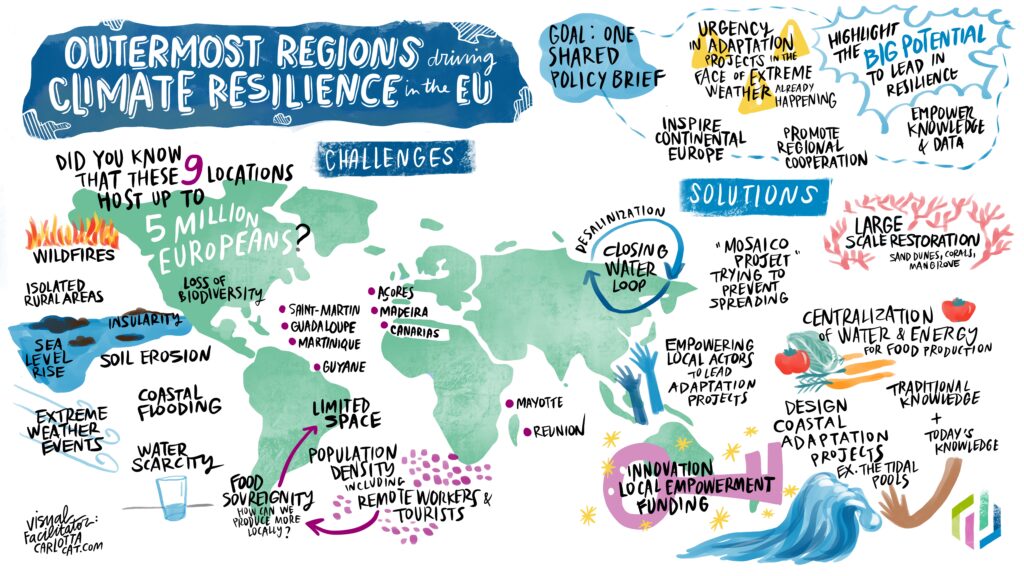
In the panel, which was shared with representatives from other outermost regions such as Guadalupe, common challenges were contrasted, such as exposure to extreme climate events and lack of connectivity. During the session, the artist CarlotaCatt visually captured the topics discussed in a final illustration that summarises the main messages shared:
Visual summary of the session, illustrated by CarlottaCat during EURESFO25
Participation in forums such as EURESFO25 is key to giving visibility to the work carried out in outermost regions like Gran Canaria and to positioning them as spaces for climate innovation. These gatherings, organised by ICLEI and the European Environment Agency(EEA), and co-organised in this edition with the City of Rotterdam and the REGILIENCE project, bring together hundreds of representatives from local administrations, academics, experts, and funders each year. Under the theme “Accelerating Action for Resilience,” the event served as a platform for sharing tangible, transferable, and fundable solutions in the face of an escalating climate crisis.
About LIFE COSTAdapta
LIFE COSTAdapta is a project co-funded by the European Union’s LIFE Programme, led by the Island Energy Council of Gran Canaria, and supported by seven partner entities: the University of Las Palmas de Gran Canaria, the University of Cantabria, INGECID, ECOncrete, Raley Estudios Costeros, the Canarias Recicla Foundation, and the Finnova Foundation. With a total budget of €3,409,864 (60% funded by the European Union) and a duration of 7 years, the project aims to design and implement tidal pool–reef systems that protect the coastline from climate change impacts while also promoting biodiversity and sustainable development. The project combines technological innovation, scientific knowledge, and social engagement to create solutions that can be transferred to other coastal regions in Europ