
The project will protect homes and the marine environment through a tidal pool-reef system inspired by Canarian tradition
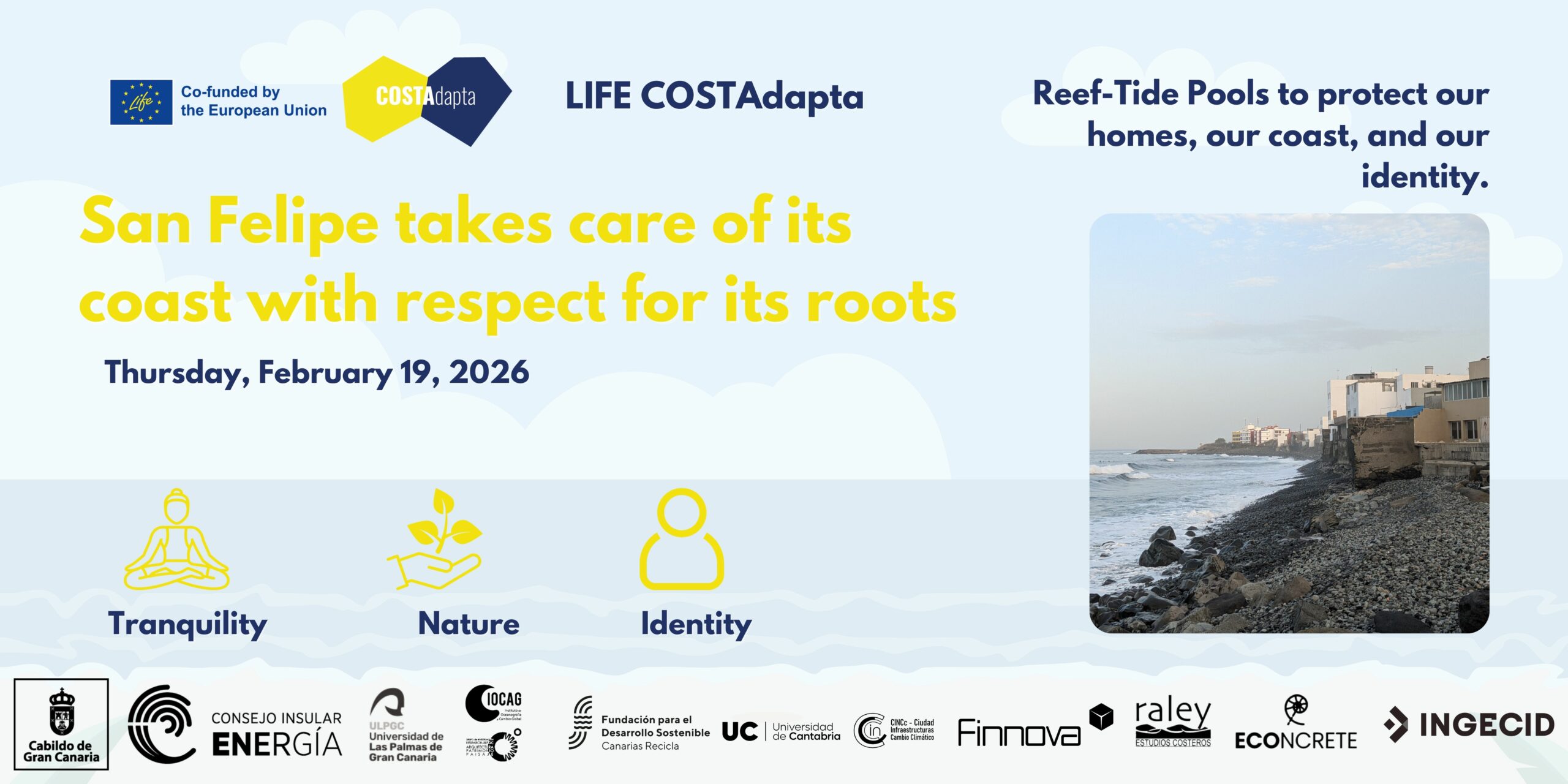
San Felipe (Gran Canaria), February 19, 2026. The European project LIFE COSTAdapta is launching a key information and awareness phase in the neighborhood of San Felipe, aiming to address residents’ concerns regarding sea-level rise and adverse coastal phenomena.
The initiative, which involves a total investment of EUR 3 337 563, proposes an innovative solution called Tidal pool-reefs. This technique not only seeks to mitigate coastal erosion but does so by integrating into the landscape, using a design that mimics the traditional tidal pools of the Canary Islands to reduce wave energy before it impacts the neighborhood’s infrastructure and homes.
A natural shield for the neighborhood
Focusing on San Felipe is a priority within Gran Canaria’s coastal adaptation strategy. LIFE COSTAdapta acts not only as a protection barrier against flooding but also promotes the recovery of marine habitats, creating new ecosystems for local species.
Unlike conventional rigid infrastructures, the tidal pool-reefs are designed to be progressive and respectful of coastal use, ensuring that San Felipe maintains its identity and its relationship with the sea safely for decades to come.
Governance and citizen participation
As established in the project’s Participation Plan, social acceptability is a fundamental pillar. Therefore, an ongoing dialogue will be maintained with neighbors to explain the technical benefits of the work and ensure the community feels part of this climate solution.
About LIFE COSTAdapta
LIFE COSTAdapta (LIFE22-CCA-ES-LIFE COSTAdapta) is a project co-funded at 60% by the European Union’s LIFE Programme. The consortium is led by the Consejo Insular de la Energía de Gran Canaria (CIEGC) and includes the University of Las Palmas de Gran Canaria (ULPGC), the University of Cantabria, INGECID, Raley Estudios Costeros, ECOncrete, the Canary Foundation for Recycling and Sustainable Development (FCR), and the Finnova Foundation.